


Die versteckten Kosten von
Wenn Sie Ihren Tesla-Frunk nicht aufrüsten
Was jeder kraftvolle Verschluss mit Ihren Scharnieren, der Dichtung und Ihrem Geldbeutel macht – und warum Vorbeugung weniger kostet, als Sie denken
Die meisten Artikel über Tesla-Zubehör erklären, was Sie durch ein Upgrade gewinnen. Dieser hier verfolgt den umgekehrten Ansatz und spricht darüber, was Sie verlieren, wenn Sie es nicht tun.
Das ist eine nützlichere Betrachtungsweise, denn die Entscheidung, kein Upgrade vorzunehmen, ist nicht neutral. Jedes Mal, wenn Sie den vorderen Kofferraum Ihres Tesla mit Kraft schließen, passiert etwas – und bei genügend Wiederholungen kostet es Sie Geld. Tesla-Besitzer, die sich ernsthaft mit ihren Fahrzeugen beschäftigen, wissen bereits, dass der Frunk aktiver Stauraum ist, nicht nur eine Kuriosität. Ladekabel, Einkaufstaschen, Handgepäck – er wird ständig geöffnet und geschlossen. Genau diese Häufigkeit ist der Grund, warum der Schließmechanismus mehr Aufmerksamkeit verdient, als er normalerweise bekommt. Das vollständige Angebot an Tesla-spezifischen Upgrades existiert, weil diese Alltagsdetails wichtiger sind, als die meisten beim Kauf vermuten.

Die Mechanik
Was tatsächlich passiert, wenn Sie die Frunk-Haube zuschlagen
Die Tesla-Frunk-Haube ist eine Verbundbaugruppe, die über ein Paar Scharniere mit der Karosserie verbunden ist. Diese Scharniere sind präzisionsgefertigte Bauteile, die die Haube bündig mit den Karosserieteilen halten, die Dichtung unter Kompression erhalten und die mechanische Last des Haubengewichts über tausende Öffnungs- und Schließzyklen aufnehmen.
Das entscheidende Wort ist „konstruiert“. Jedes mechanische Design hat eine Belastungstoleranz. Die Frunk-Haube eines Model 3 wiegt je nach Variante etwa 8–12 kg. Wenn Sie sie mit der Kraft schließen, die das Werk vorgibt – von Besitzern typischerweise als fester Zweihanddruck beschrieben – wird diese kinetische Energie direkt auf die Scharnierdrehpunkte und den Verriegelungsmechanismus übertragen. Die Haube senkt sich nicht sanft in ihre Ruheposition. Sie schlägt auf.
Ein einzelnes Schließen mit dieser Kraftstufe ist kein Problem. Zweitausend Schließvorgänge über drei Jahre sind eine ganz andere Sache.
Kumulative Schäden
Die Physik des langfristigen Gebrauchs
Metallermüdung ist kein dramatisches Ereignis. Es ist eine langsame Ansammlung mikroskopischer Belastungen an den Stellen, an denen eine Komponente wiederholt Kraft aufnimmt. Bei Scharniermechanismen zeigt sich das als allmählich zunehmendes Spiel im Drehpunkt – eine Lockerheit, die zunächst unmerklich ist und sich verstärkt, bis die Haube nicht mehr perfekt bündig mit den Kotflügeln abschließt.
Schon eine Fehlstellung von ein oder zwei Millimetern hat Folgen. Die Dichtung – der Gummiring, der die Frunk-Öffnung umgibt – ist auf gleichmäßige Kompression gegen eine bündige Fläche angewiesen, um ihre Dichtheit zu gewährleisten. Wenn die Haube ungleichmäßig schließt, wird die Dichtung ungleichmäßig komprimiert. Ein Abschnitt wird überkomprimiert und verformt sich dauerhaft; ein anderer Abschnitt verliert den Kontakt und lässt Wasser, Staub und kalte Luft in den vorderen Kofferraum eindringen.
Über die Dichtung hinaus trägt wiederholter Aufprall am Verriegelungsmechanismus im Laufe der Zeit zum Verschleiß bei. Die werkseitige Verriegelung ist auf das von Teslas Ingenieuren erwartete Schließkraftprofil kalibriert. Eine konstante Kraft oberhalb dieses Profils – selbst geringfügig darüber – verschiebt die Verschleißkurve und verkürzt die effektive Lebensdauer der Komponente. Das ist von außen nicht sichtbar. Es sammelt sich unbemerkt an und zeigt sich erst im Servicecenter.
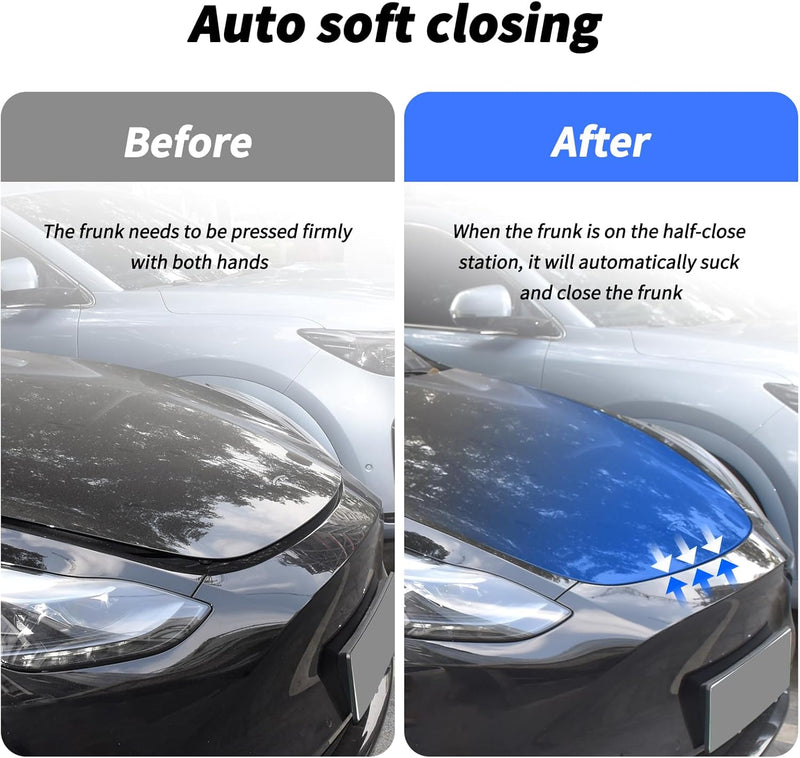
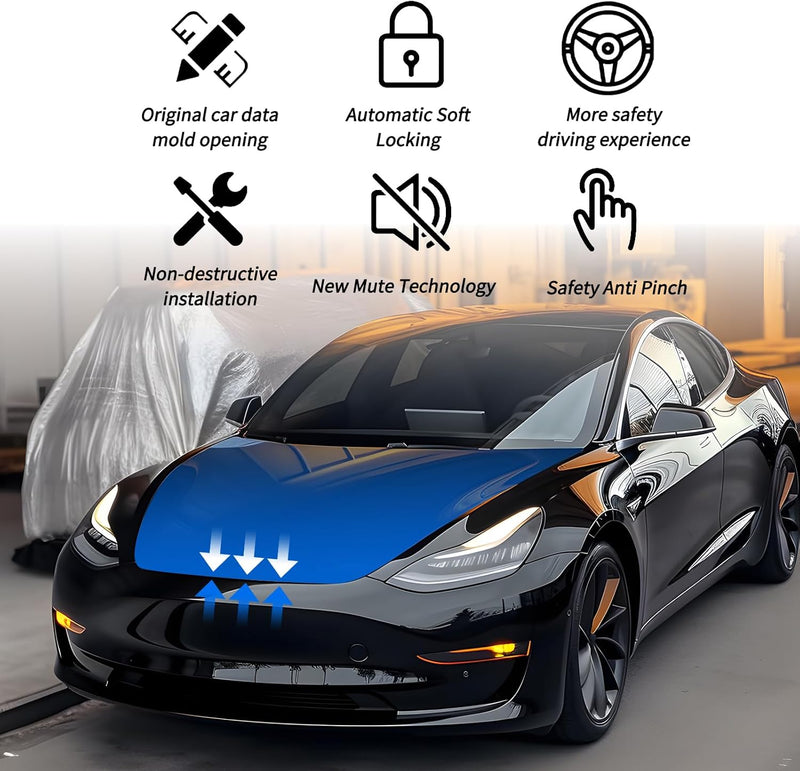
Besitzer, die genau gegen diese Art von Verschleiß vorsorgen wollen, finden relevante Steuerungs- und Komfort-Upgrades, die direkt den Schließmechanismus ansprechen – aber der finanzielle Nutzen sollte konkret dargelegt werden.
Die echten Zahlen
Was Reparaturen tatsächlich kosten
Dichtungen am Tesla Frunk sind kein günstiger Ersatz. Besitzer berichten in Tesla-Foren durchweg, dass der OEM-Dichtungsersatz für Teile zwischen 150 und 300 US-Dollar liegt, ohne Arbeitskosten. Die Inspektion und Einstellung der Scharniere in einem Tesla Service Center kostet in der Regel 200 bis 400 US-Dollar, abhängig davon, was beim Termin festgestellt wird. Ein Scharnierwechsel – falls das Spiel bereits zu groß geworden ist – ist ein umfangreicherer Auftrag, der auch die Ausrichtung der Verkleidung umfasst und bei marktüblichen Arbeitskosten 600 bis 1.000 US-Dollar oder mehr erreichen kann.
Der Austausch des Riegelmechanismus ist seltener, aber nicht unbekannt, und erfordert zusätzliche Diagnosezeit, da Techniker bestätigen müssen, ob das Problem am Riegel selbst oder an der Ausrichtung liegt, die darauf einwirkt. In Fällen, in denen eine Fehlstellung über längere Zeit geduldet wurde, müssen manchmal mehrere Komponenten im selben Servicebesuch überprüft werden.
| Reparaturart | Typischer Kostenbereich | vs. Soft-Close-Verriegelung (135 $) |
|---|---|---|
| OEM-Dichtungsersatz | $200 – $400 | 1,5× – 3× die Upgrade-Kosten |
| Scharnier-Inspektion & -Justierung | $200 – $400 | 1,5× – 3× die Upgrade-Kosten |
| Scharnier-Austausch + Verkleidungs-Ausrichtung | 600 $ – 1.000 $+ | 4× – 7× die Upgrade-Kosten |
| Grundig Soft-Close-Verriegelung | 135 $ einmalig | Verhindert all das oben Genannte |
Die Lösung
Die Rechnung, die niemand macht
Rechnen Sie selbst nach, selbst im konservativsten Reparaturszenario. Wenn die Dichtung nach vier Jahren ersetzt werden muss – ein realistischer Zeitrahmen für ein täglich bei wechselhaftem Wetter gefahrenes Auto – liegen die Teilekosten allein bei 150–300 $. Fügen Sie einen Werkstatttermin hinzu, sind es mindestens 300–500 $. Das sind zwei- bis viermal so viel wie die Kosten, das Problem komplett zu verhindern.
Das Scharnier-Szenario ist schlimmer. Ein einziger Scharnier-Justier-Service deckt die Kosten der Soft-Close-Verriegelung mehrfach ab. Ein kompletter Scharnier-Austausch mit Ausrichtung der Verkleidung kann eine Rendite von sieben zu eins auf die 135 $ Investition darstellen, die das Problem hätte verhindern können.
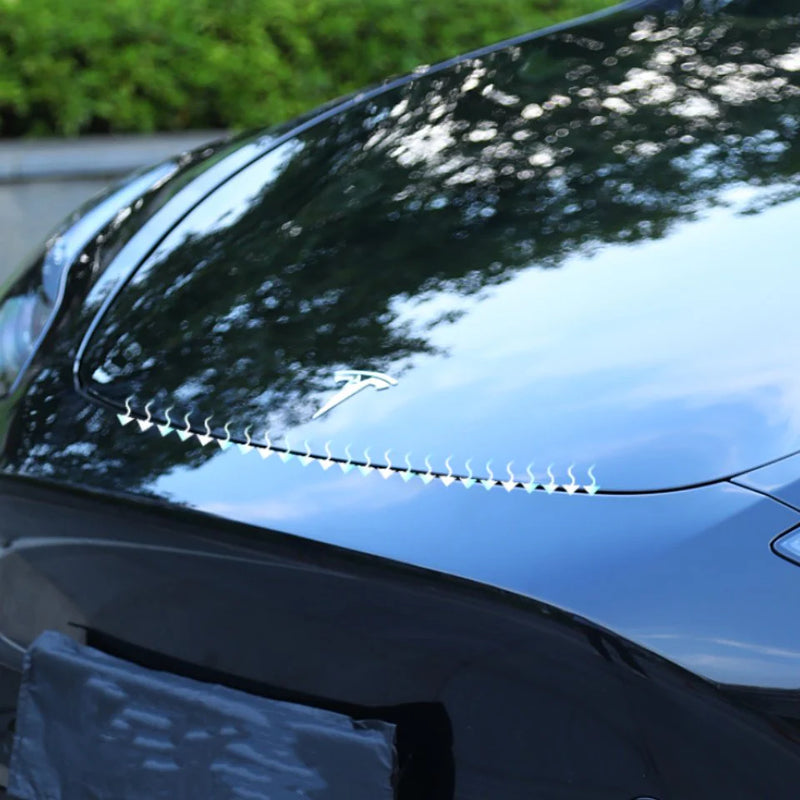
Grundig Power Frunk
Soft-Close-Verriegelung
Drücken Sie die Motorhaube bis auf 5 mm vor das Schließen – der magnetische Mechanismus dichtet den Rest ab. Eliminieren Sie alle Aufprallkräfte auf Scharniere, Riegel und Dichtung. & S.
$135 $159
Jetzt einkaufen →Nichts davon garantiert, dass Ihr Frunk ohne das Upgrade Probleme entwickelt. Mechanischer Verschleiß ist probabilistisch, nicht deterministisch – einige Autos fahren 100.000 Meilen ohne Scharnierproblem. Aber die Kraft-Schließ-Dynamik ist nicht harmlos, und die Kostenasymmetrie ist real: Sie geben jetzt 135 $ aus oder später 300–1.000 $ für ein Problem, das völlig vermeidbar gewesen wäre.
Technische Details
Was das Upgrade tatsächlich verändert
Das Grundig Soft Close Lock ersetzt die erzwungene Schließdynamik durch einen magnetischen Saugmechanismus, der für dauerhaften Einsatz bei geringer mechanischer Belastung ausgelegt ist. Das Gehäuse besteht aus PA66-GF30 – einem glasfaserverstärkten Polyamid, das für thermische Stabilität über 120 °C und Beständigkeit gegen Spannungsrisse bei zyklischer Belastung entwickelt wurde. Diese Materialwahl ist kein Zufall, sondern spiegelt die realen Einsatzbedingungen eines vorderen Kofferraums wider: Temperaturschwankungen von Umgebungstemperatur bis zu sonnenbelasteten Temperaturen, Straßenerschütterungen und tausende wiederholte mechanische Vorgänge über die Lebensdauer des Fahrzeugs.
Die Installation dauert 15 bis 20 Minuten ohne Bohren, Schneiden oder Änderungen an der Originalverkabelung. Das System unterstützt drei Auslösemethoden – den Tesla-Touchscreen, die Tesla-App und einen dedizierten physischen Knopf – und ist kompatibel mit Model 3, Model Y, Model X und Model S über mehrere Baujahre hinweg. Die mechanische Belastung, die bei jedem Soft-Close auf Scharnier und Riegel wirkt, ist nur ein Bruchteil der Belastung bei einem manuellen Schließen. Genau dieser Bruchteil, multipliziert mit hunderten Schließvorgängen pro Jahr, sorgt für den eigentlichen Schutz.
Wer sich für die breitere Kategorie der Optik- und Funktions-Upgrades interessiert, wird feststellen, dass das Soft-Close-Schloss neben anderen Produkten steht, die nach derselben Logik entwickelt wurden: Veränderungen, die von außen unsichtbar sind, aber den langfristigen Zustand des Fahrzeugs maßgeblich beeinflussen.
Nutzungskontext
Der Frunk ist eine Komponente für den täglichen Gebrauch
Diese Unterscheidung ist wichtig, weil die vorderen Kofferräume bei Teslas anders genutzt werden als herkömmliche Motorhauben. Darunter befindet sich kein Motor. Es ist ein aktiver Stauraum – und viele Tesla-Besitzer öffnen und schließen den Frunk mehrmals pro Woche, manchmal sogar mehrmals täglich.
Bei 5 Schließvorgängen pro Woche × 3 Jahre = 780 erzwungene Schließvorgänge
Bei 10 Schließvorgängen pro Woche × 3 Jahre = 1.560 Kraft-Schließvorgänge
Jede einzelne überträgt 8–12 kg Aufprallkraft auf das Scharniergelenk und den Verriegelungsmechanismus.
Der Scharnier- und Verriegelungsmechanismus wurde für diese Nutzung entwickelt – aber nicht für maximale Kraft, unbegrenzt und ohne mechanische Dämpfung. Die Soft-Close-Verriegelung fügt kein Feature hinzu, das Sie nur gelegentlich nutzen. Sie verändert die grundlegende Physik von etwas, das Sie ständig tun. Das ist eine andere Art von Upgrade – nicht ästhetisch, nicht komfortabel, sondern mechanischer Schutz von Komponenten, die teuer zu ersetzen und unangenehm auszufallen sind.
Für einen vollständigen Überblick über das Angebot von Grundig Auto für Tesla-Plattformen und konventionelle Fahrzeuge deckt der vollständige Katalog auf grundig-auto.com alles ab – von Diagnosetools bis zu Performance-Teilen – alle nach dem gleichen Ingenieursstandard gefertigt, der die Soft-Close-Verriegelung überhaupt erst so interessant macht.
Langfristiger Wert
Was „Qualität wirklich wichtig nehmen“ tatsächlich erfordert
Es lohnt sich, genau zu erklären, was „Qualität wirklich wichtig nehmen“ in der Praxis bedeutet, denn das Konzept ist leicht zu bejahen, aber schwer umzusetzen. Es heißt nicht, mehr Geld auszugeben um des Geldes willen. Es bedeutet, darauf zu achten, woraus etwas tatsächlich gemacht ist, wie es konstruiert wurde und ob die Menschen, die es hergestellt haben, an die Person gedacht haben, die es letztlich benutzt – oder nur an die Produktionskosten.
Im Bereich der Autozubehör zeigt sich dieser Unterschied ganz konkret. Eine Soft-Close-Verriegelung aus PA66-GF30 – einem glasfaserverstärkten Polyamid mit extremer Temperaturbeständigkeit – verhält sich nach drei Jahren täglicher Nutzung anders als eine aus Standard-ABS-Kunststoff, der über 80 °C weich wird. Das sind keine Werbeversprechen. Das sind materielle Tatsachen, und solche Details bringt ein Unternehmen mit achtzig Jahren Ingenieursdisziplin in der Regel richtig hin – nicht, weil es jemanden beeindrucken will, sondern weil es lange genug ernsthaft baut, um zu wissen, was zählt.
So sieht eine Marke aus, die 1945 gegründet wurde und auch 2026 noch relevante, fahrzeugspezifische Produkte herstellt – von innen betrachtet. Nicht auffällig. Einfach gründlich.
Verhindern Sie Verschleiß, bevor er beginnt 135 $ heute · statt 300–1.000 $ später im Servicezentrum · Kostenloser Versand
Soft-Close-Verriegelung kaufen →