

Before You Hit the Road:
The RV Pre-Trip Safety Checklist That Most Owners Skip
Every RV owner checks the engine oil and the hitch. Almost none check the one thing most likely to strand them before the first rest stop.
The ritual before an RV road trip is familiar. Walk around the vehicle, check the slides, confirm the hitch is secure, verify the brake lights, top up the fluids. Most RV owners have a version of this list that they run through with reasonable consistency. What almost none of them have on that list is a tire pressure verification for every axle — including the trailer, if there is one — conducted at the inflation pressures appropriate for the actual loaded weight they're departing with that morning.
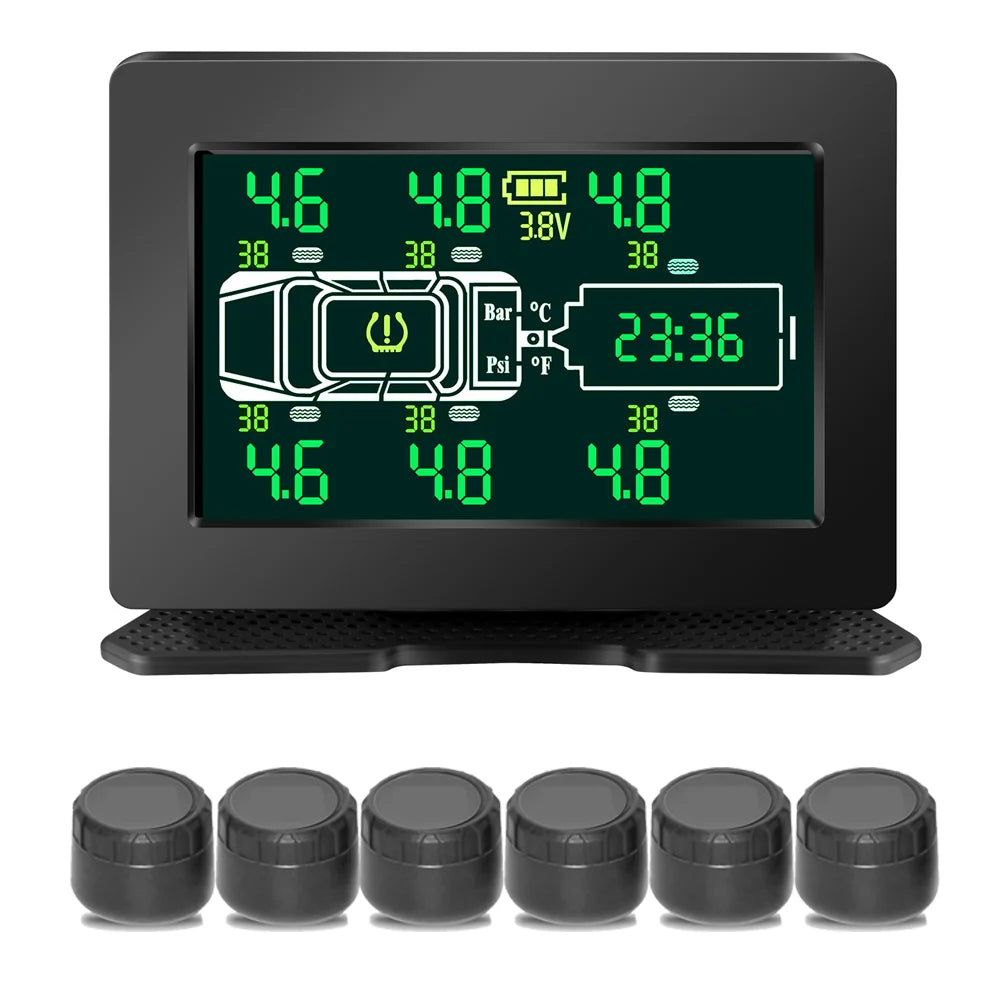
Tire pressure is the single most common cause of RV roadside breakdowns, and the most preventable. It is also the easiest item to skip on a pre-trip check because tires look fine when they're underinflated by 15 PSI. They hold shape. They don't show obvious distress. The problem is happening inside the carcass, in the heat the undertired tire generates when it's being asked to carry more load than its inflation supports. A real-time tire pressure monitoring system doesn't replace the pre-trip check — it extends it into the drive, catching the slow leak or heat-induced pressure change that starts 40 miles down the road rather than in the driveway.
This checklist covers the pre-trip items that most owners skip, with specific attention to the tire pressure checks that the majority of RV owners perform incorrectly, incompletely, or not at all.
The Pre-Trip Tire Check
Why Tire Pressure Is the Most Skipped Item on Every Pre-Trip List
The standard advice is to check tire pressure before every trip. Most RV owners interpret this as checking front tires and easy-access rear tires with a handheld gauge, confirming the pressure is somewhere near the number on the sticker, and moving on. This is not an adequate tire pressure check for a loaded RV departure.
There are three variables that make a pre-trip tire check for an RV meaningfully different from a passenger car check. First, the correct inflation pressure for an RV depends on the actual loaded weight, not just the sticker recommendation — tire manufacturers publish load-inflation tables that show the required PSI for a given load, and the number changes significantly between empty and full. Second, dual rear tires require checking both inner and outer — the inner tire is invisible from outside the vehicle and frequently runs 10–15 PSI below the outer by the time anyone checks. Third, if the RV is towing a trailer, the trailer tires require independent checking against their own load-inflation requirements.
Load and Pressure
The Relationship Between What You're Carrying and What Your Tires Need
Most RV owners set their tire pressure once, early in the ownership period, and check against that number from then on. What they're usually checking against is the pressure they set for a lightly loaded vehicle — which may be 15 to 20 PSI below what the tire needs when the RV is fully loaded for a two-week summer trip.
The calculation is not complicated, but it requires knowing the actual axle weights. A rear axle carrying 6,000 lbs on dual rear tires needs different inflation than the same axle carrying 8,500 lbs fully packed. Every tire manufacturer publishes the table. Almost no RV owner has consulted it after the initial setup. The result is that fully loaded RVs routinely depart on long trips with tires underinflated for their actual load condition — not dramatically, not visibly, but enough to generate excess heat and accelerate carcass fatigue over a sustained drive.
Summer Specifics
Heat Expansion and Mountain Descents: The Two Summer Variables Most Owners Ignore
Summer RV travel introduces two tire pressure variables that a pre-trip morning check doesn't account for and can't predict: ambient temperature rise during the drive and heat buildup from sustained mountain descents.
Tire pressure increases approximately 1 PSI for every 10°F of temperature increase. A departure at 65°F that reaches driving conditions of 95°F produces a 3 PSI pressure increase before road heat is added. This is normal and accounted for in manufacturer specifications — the concern is the driver who over-deflates at the cold morning check to a PSI that drops below safe operating range once the full heat load develops mid-trip.
Mountain descents create a different problem. Sustained braking on long downhill grades generates heat in the brake components that transfers into the tire and wheel assembly, raising tire temperature well above what highway cruising produces. A tire that enters a mountain descent at normal operating temperature exits it at elevated temperature and pressure. If the tire was already at or near its maximum inflation due to heat from the drive, the descent can push it beyond the safe upper limit. The correct response — confirmed by pressure readings — is to stop before the descent, not after.
The Complete Pre-Trip Checklist
What a Thorough RV Departure Check Actually Covers
-
1Check tire pressure against loaded axle weightsNot the sticker number — the load-inflation table number for your actual loaded weight that morning. These are different for most fully packed RVs.
-
2Check inner dual rear tires independentlyRequires reaching between the dual tires with a long-stem gauge or right-angle adapter. Cannot be checked visually or from outside the tires.
-
3Check trailer tires against trailer axle weightsTrailer tires are the most commonly skipped check. They carry significant load and are completely invisible during driving without a monitoring system.
-
4Confirm TPMS is active and all sensors are reportingBefore departure, verify every monitored position is showing a reading and that readings match your gauge check. A sensor that isn't transmitting is a position you're not monitoring.
-
5Set alarm thresholds for the loaded tripIf your thresholds are set for light-load inflation, they may not alarm appropriately for your fully loaded departure pressure. Adjust before you leave, not after the first alarm.
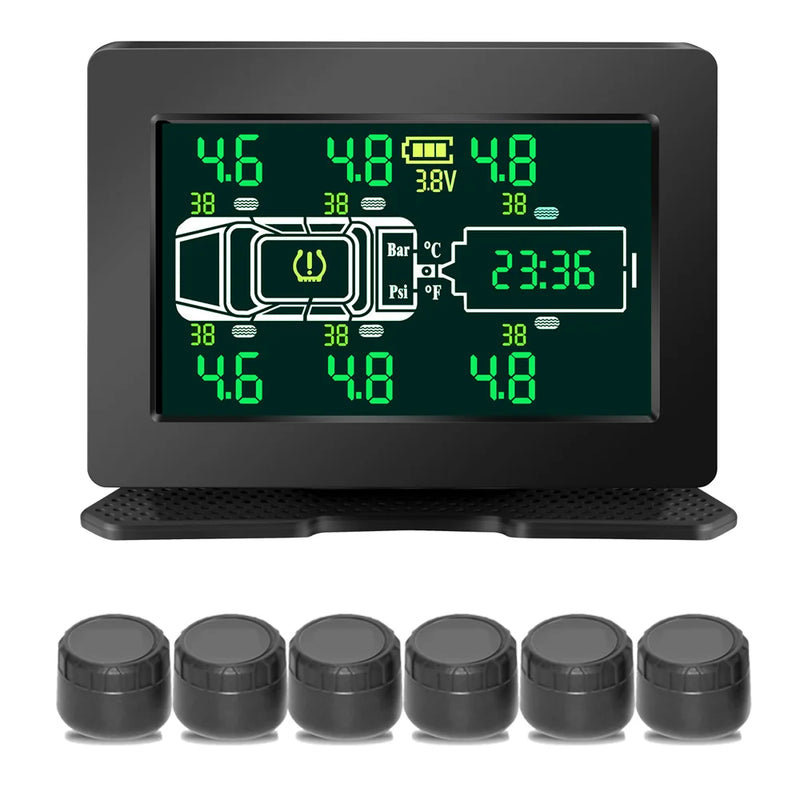
The complete Grundig TPMS range covers RV configurations from standard motorhomes to heavy Class A diesel pushers, with switchable 4/6/8-wheel modes for owners who monitor the tow vehicle and trailer simultaneously.
Grundig RV TPMS
4/6/8-Wheel Switchable
116 PSI range, ±1.5 PSI precision, 5.0" display. Real-time pressure and temperature for every monitored position. Full alarm suite: low/high pressure, rapid leak, high temperature, sensor battery. Free shipping.
$119
Shop Now →Start every trip knowing every tire. Free shipping · 116 PSI range · 4/6/8-wheel switchable
Shop RV TPMS →