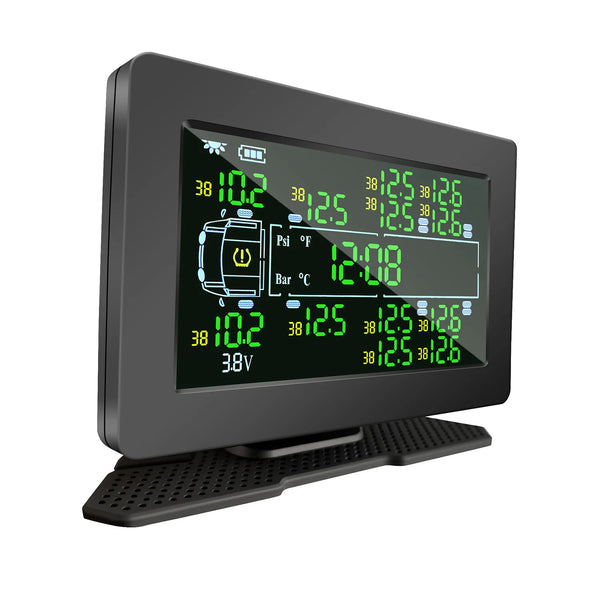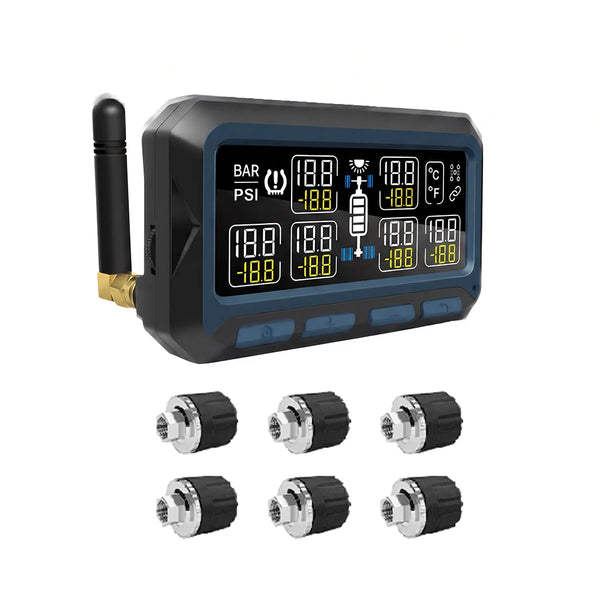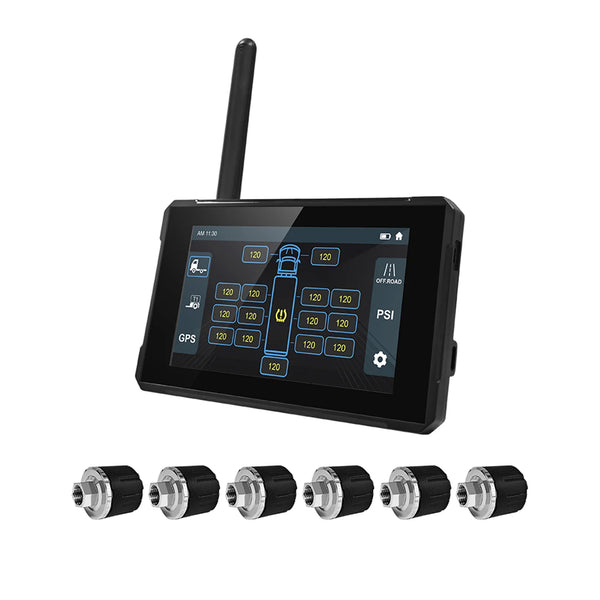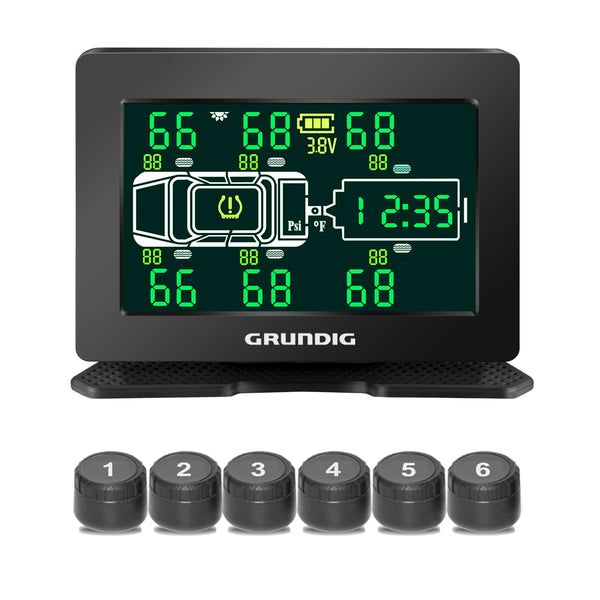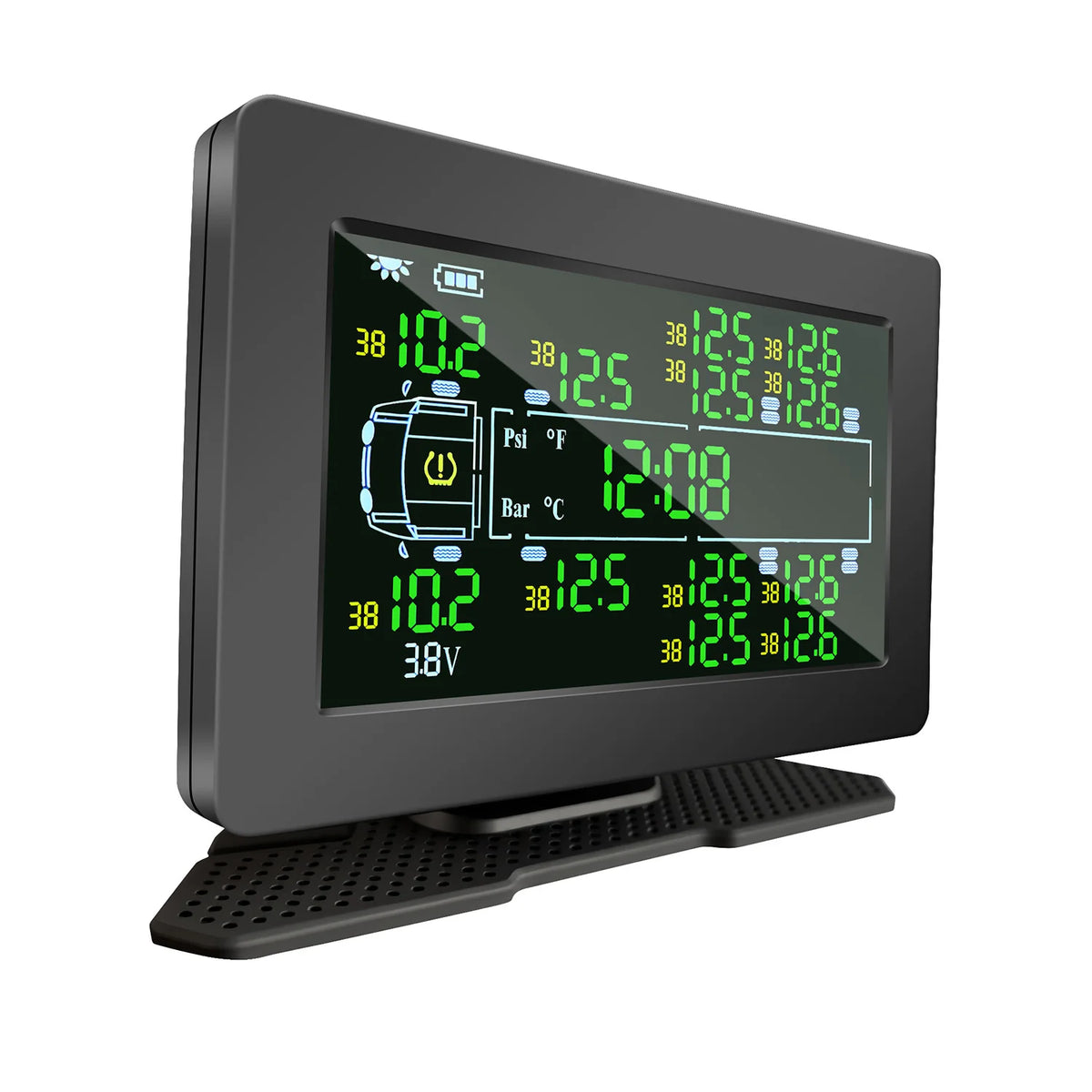


Grundig S08 Heavy-Duty TPMS, 8/10/12-Wheel Modes, 217 PSI, 5" HD Display, Real-Time Tire Pressure & Temp Alerts

Need more sensors? Check the model:

Couldn't load pickup availability


Core Parameters
- SKU S08-8WHEEL-8BAR
- Compatible Vehicles Optimized for high-pressure monitoring up to 217 PSI, the S08 provides total safety coverage for 8 to 12-wheel rigs, including Luxury Class A Diesel Pushers, Triple-Axle Toy Haulers, and Heavy-Duty Commercial Trucks.
- Built-in battery capacity 650mA
-
Tire pressure alarm value
Default Low Pressure Alarm: 72 PSI (5.0 Bar)
Default High Pressure Alarm: 145 PSI (10.0 Bar)
User Manual
- User Manual Download
Need Help?
If you need any help, please don't hesitate to contact us at
GRUNDIG: 80 Years of Automotive Engineering & Precision
Since 1945, Grundig has stood for German precision engineering. From the 1951 Autosuper 248 to today, we've evolved from car audio to advanced automotive safety solutions. This heritage drives our TPMS systems: professional-grade components and real-time sensing technology that deliver reliable monitoring for every vehicle.
Ⅰ. Compatible Vehicles
Specifically engineered for multi-axle configurations and high-pressure industrial tires, supporting seamless monitoring for 8 to 12-wheel setups up to 217 PSI (15.0 Bar):
Luxury Class A Diesel Pushers: The ultimate choice for premium, heavy-chassis motorhomes that often feature a tag axle (8 wheels total) and require high-pressure stability for cross-country tours.
Massive 5th Wheel & Toy Haulers: Optimized for triple-axle trailers (e.g., Grand Design Momentum, Keystone Fuzion) and heavy-duty towing combinations that exceed standard tire pressure limits.
Commercial Trucks & Semi-Trailers: Reliable real-time monitoring for commercial fleet vehicles, including dual-rear-wheel (DRW) box trucks and 10-to-12 wheel semi-configurations.
Dually Pickups with Gooseneck Trailers: Perfect for heavy-duty setups like a Ford F-450 or RAM 3500 towing large gooseneck trailers, where monitoring the entire 8-to-10 wheel footprint is critical for safety.

Ⅱ. Product Function
【Industrial-Grade Range: Up to 217 PSI】Specifically engineered for the heaviest rigs, the S08 monitors pressures up to 217 PSI (15.0 Bar). It is the ultimate solution for high-load tires (Range G/H/J) found on Class A Diesel Pushers and massive 5th wheels.
【8/12 Wheel Seamless Switching】Versatility for every configuration. Easily switch between 8-wheel and 12-wheel modes to match your specific setup, whether it's a dually pickup towing a large 5th wheel or a full commercial truck with a trailer.
【40-Meter Long Range & Stable Signal】Specifically designed for large vehicles, the system features a powerful transmission range of up to 40 meters (131 feet). Enjoy consistent data syncing with zero packet loss, making it the perfect monitoring solution for long motorhomes, travel trailers, 5th wheels, and towed vehicles.
【High-Precision Core & Zero Latency】Powered by advanced imported chipsets, this system delivers ultra-precise data feedback with zero latency. It monitors tire conditions in real-time with enhanced stability, allowing you to prevent unexpected blowouts and handle emergencies before they happen.
【Intelligent Automatic Start-Stop】Featuring a built-in vibration sensor, the monitor intelligently powers on when it detects vehicle movement and enters a power-saving standby mode when idle. This fully automated system requires no manual operation, significantly extending battery life and ensuring the device is always ready when you are.
【"Four-Proof" Rugged Reliability】Engineered to endure the harshest road conditions. Our sensors feature a Four-Proof design: IP67 Waterproof, Anti-Seismic, Dust-Proof, and Anti-Corrosion. From melting bitumen to freezing mud, these sensors provide 24/7 reliability without failure.
【Anti-Theft Security Design】 Equipped with custom anti-theft hex nuts and a dedicated wrench, the sensors lock securely onto your tire valve stems. This specialized mechanical design effectively prevents casual opportunistic theft and ensures the sensors remain firmly attached even during high-speed highway driving or intense off-road vibrations.
Ⅲ. Purchase Precautions
Before placing an order, please carefully confirm whether it is compatible with your model.
IMPORTANT: ADAPT ALARM SETTINGS BEFORE USE!
The factory default high-pressure alarm for the S08 is set at 145 PSI (10.0 Bar). While this is designed for heavy-duty use, tire requirements for Class A Motorhomes, 5th Wheels, and Commercial Trucks vary significantly.
To prevent false alerts or delayed warnings, you MUST reset your high and low pressure alarm limits (Supports up to 217 PSI / 15.0 Bar) according to your specific tire manufacturer standards BEFORE installation. Ensure your safety thresholds are correctly calibrated for a quiet and secure journey across long distances.
ABOUT TPMS
Compare TPMS Specifications
| Compare Models |
HIGHEST PRESSURE
 S08
Learn More
S08
Learn More
|
MAX EXPANSION
 550S
Learn More
550S
Learn More
|
ENTRY LEVEL
 RV01
Learn More
RV01
Learn More
|
6-WHEEL SPECIALIST
 S04
Learn More
S04
Learn More
|
|---|---|---|---|---|
| Max Pressure | 217 PSI (15.0 BAR) | 200 PSI (13.8 BAR) | 116 PSI (8.0 BAR) | 217 PSI (15.0 BAR) |
| Supported Wheels | 8 - 12 Wheels | 6 - 36 Wheels | 4 - 8 Wheels | Up to 6 Wheels |
| Best Suited For | Heavy Duty & High-PSI Trailers | Commercial Fleets & Multi-Axle | Standard RVs & Campers | 6-Wheel Trucks & RVs |
| Compare Models | Max Pressure | Supported Wheels | Best Suited For | Action |
|---|---|---|---|---|
|
HIGHEST PRESSURE
|
217 PSI (15.0 BAR) | 8 - 12 Wheels | Heavy Duty & High-PSI Trailers | Learn More |
|
MAX EXPANSION
|
200 PSI (13.8 BAR) | 6 - 36 Wheels | Commercial Fleets & Multi-Axle | Learn More |
|
ENTRY LEVEL
|
116 PSI (8.0 BAR) | 4 - 8 Wheels | Standard RVs & Campers | Learn More |
|
6-WHEEL SPECIALIST
|
217 PSI (15.0 BAR) | Up to 6 Wheels | 6-Wheel Trucks & RVs | Learn More |
FAQs
The S08 is an industrial-grade system specifically engineered for heavy-duty applications, supporting a professional monitoring range up to 15.0 Bar / 217 PSI. This makes it the ideal safety solution for Class A Diesel Pushers, triple-axle 5th wheels, and commercial semi-trucks.
Absolutely. The system is designed for versatility, allowing you to seamlessly switch between 8-wheel and 12-wheel modes. You can easily adjust the tire quantity in the system settings (Section 3.7) to match your current towing setup.
While our system has a powerful 40-meter (131ft) open-air range, the dense metal frame and aluminum skin of many RVs can block radio signals. If your total setup (Truck + Trailer) is longer than 30 feet, a Signal Booster ensures you never experience "signal dropouts" or delayed readings from your rear tires.
No. The S08 features a built-in smart vibration sensor. The display intelligently wakes up and shows real-time data when it detects vehicle movement and enters a power-saving standby mode when the vehicle has been idle.
The monitor is equipped with a 650mAh high-capacity battery and supports fast charging via a Type-C (DC 5V) port. With an ultra-low operating current of only 15mA, the system provides consistent monitoring for extended periods on a single charge.
IMPORTANT: You must power on the display monitor FIRST before attaching the sensors to your valve stems. This ensures the monitor is ready to capture and sync the signal the moment the sensor is tightened.
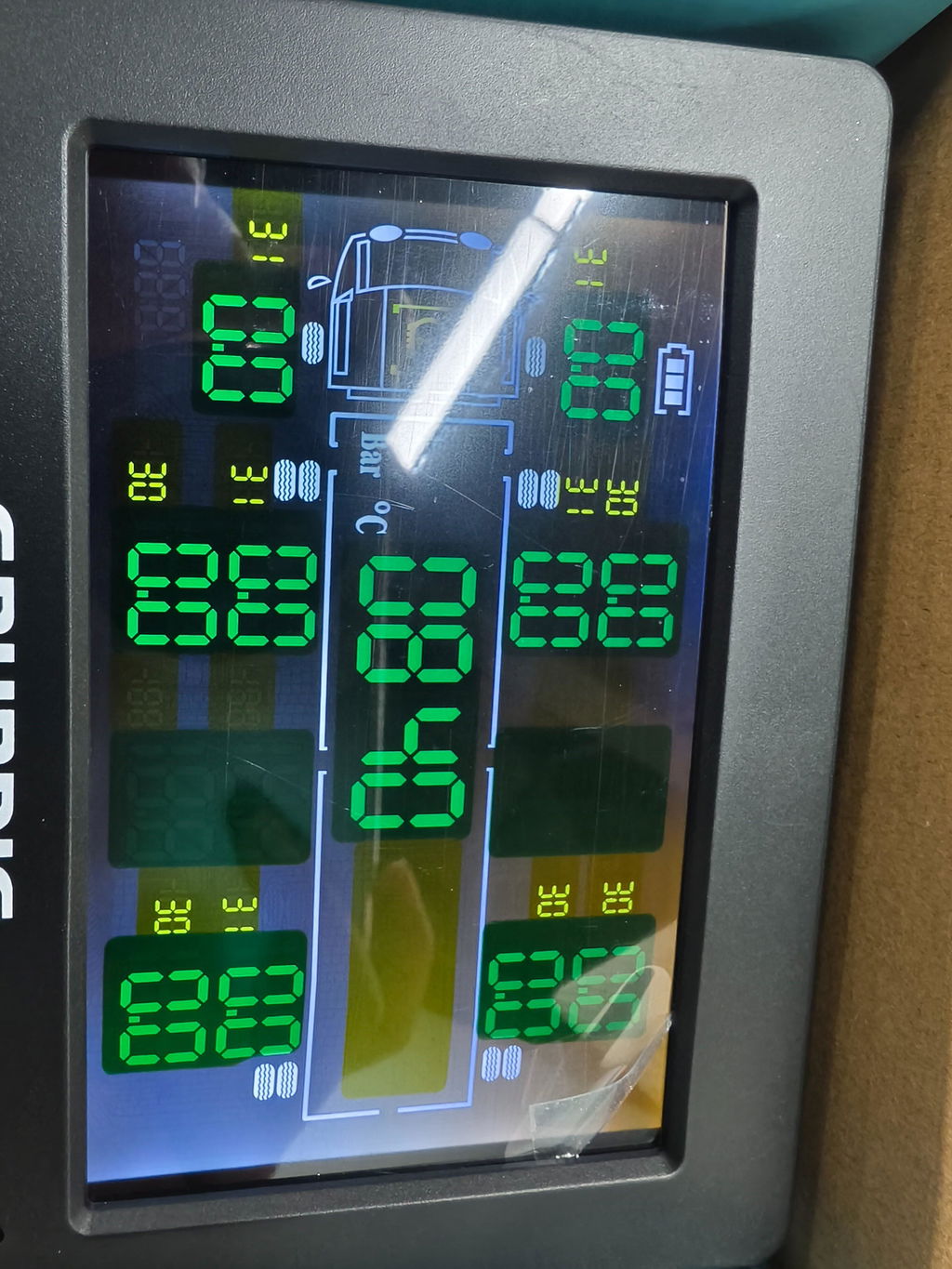
This is completely normal. The pre-displayed readings are residual test data from our quality control checks at the factory. Once you install the sensors on your tire valves, the real-time data will automatically overwrite these values.
You can easily change the pressure units by following these steps:
1. In standby mode, press and hold the Center Settings Button for 3 seconds to enter the menu.
2. Short press the Center Button until BAR flashes on the screen.
3. Use the Up/Down Buttons to toggle and select PSI.
4. Press the Center Button once more to confirm and save your setting.
That is a great question, but there is a major technical difference between factory systems and a dedicated heavy-duty setup:
- Indirect vs. Direct Monitoring: Most standard factory vehicles use Indirect TPMS, which doesn't actually measure air pressure. Instead, it uses your car's ABS wheel-speed sensors to estimate if a tire is flat. It will not show you real-time PSI numbers or critical temperature changes on your dashboard.
- The RV & Trailer Blind Spot: Factory TPMS is strictly designed for the 4 tires of your solo vehicle. When you hook up an RV, travel trailer, or fifth wheel, your factory dashboard cannot monitor those towed tires.
Our direct TPMS system gives you real-time, sensor-to-screen precision for both your towing vehicle and your trailer simultaneously, catching dangerous pressure fluctuations before they escalate.
You are absolutely correct that tire age, wear, and structural damage are the leading causes of highway blowouts. Regular tire replacement (every 6–7 years) and visual checks are absolutely essential.
However, a TPMS is not a replacement for maintenance—it is your second pair of eyes on the highway. Even brand-new tires can run over a stray nail, suffer a slow leak, or experience severe internal friction.
While driving, your eyes and common sense cannot detect:
- A slow, silent leak that drops your PSI over 50 miles, overheating the tire wall.
- A sudden temperature spike caused by a sticking brake caliper or bearing failure.
- Rapid decompression before the vehicle begins to fish-tail.
Our TPMS catches these invisible, real-time metrics instantly, giving you the critical minutes you need to pull over safely before a compromised tire catastrophically blows out.
This is completely normal and usually depends on the installation sequence. To ensure instant pairing, always power on your monitor before screwing the sensors onto your tire valves.
If you installed the sensors while the monitor was still turned off, the system will enter its standard background syncing cycle. It may take 10 to 15 minutes of waiting (or a short drive) for the monitor to capture the signal and display the correct, updated tire pressure and temperature.
If you want an instant sync, simply unscrew the sensors, turn on your monitor first, and then screw the sensors back on.