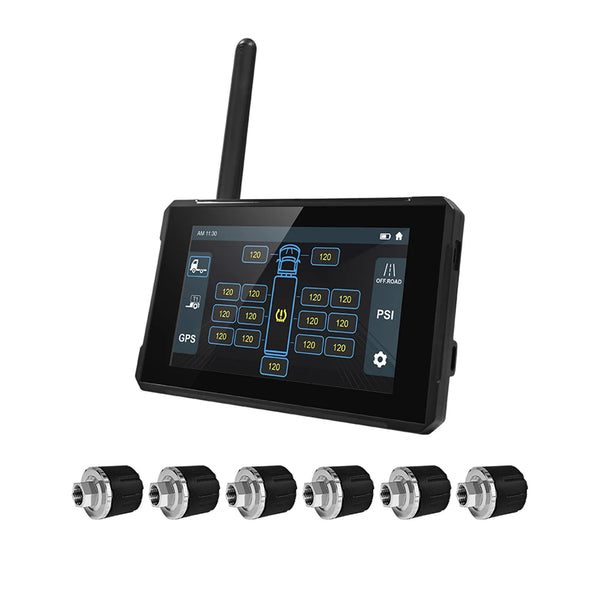
Système de surveillance de la pression des pneus Grundig TPMS
· 116 PSI Max Pressure
· Supports 4 to 8 Wheels & Switchable 4/8-Wheel Modes
· Real-Time Tire Temperature & Pressure Alerts
· 1.45 PSI Pressure & ±5.4 ℉ Temperature Accuracy
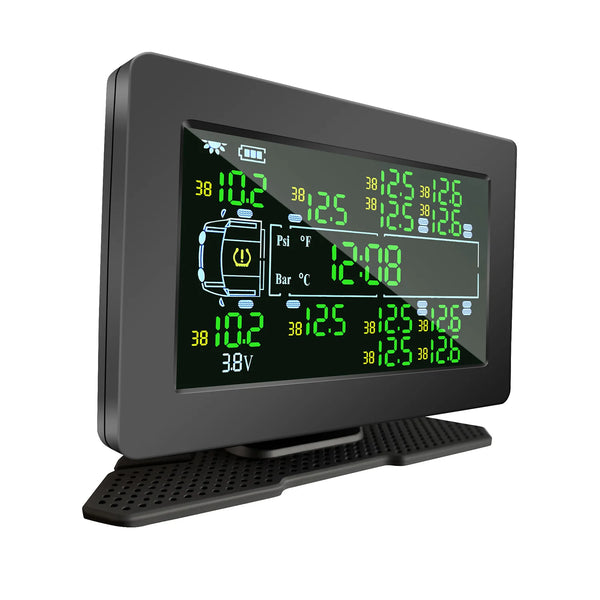
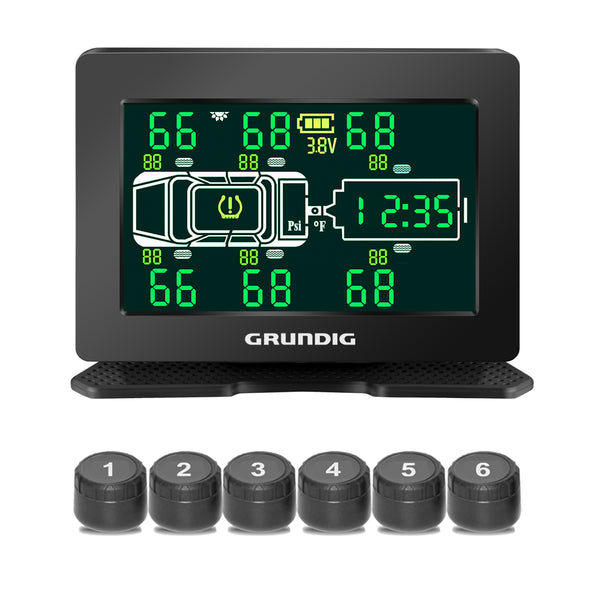
· 5.0" HD Display, At-a-Glance Clarity. Day or Night
· About 2 weeks Long-Lasting on a single charge
· Operation temperature: -40°F ~ 257°F
Need higher pressure? Check this model:

Impossible de charger la disponibilité de la réception


Specification
- Unité de gestion de stock RV01-8WHEEL-2
- Compatible Vehicles Supports 4 to 8 tires up to 116 PSI—built for vans, pickups, trailers, and 5th wheels.
- Pressure Setting Range 14.5 ~ 116 PSI
- Temperature Setting Range 122°F ~ 194°F
- Operating Temperature -40°F ~ 257°F
-
Tire pressure alarm value
Default alarm:
Low Pressure: 40 PSI
High Pressure: 90 PSI
User Manual
- User Manual Télécharger
Need Help?
If you need any help, please don't hesitate to contact us at

Real RVers. Real Peace of Mind.
Unfiltered stories from drivers who tow, haul, and camp with GRUNDIG.

David J
The 5-inch screen is awesome, I can see all 8 sensors at a single glance without having to switch screens. Honestly, it just takes the stress out of driving, no constantly worrying about my tires. The team behind it is fantastic and truly takes care of customers. I don’t just recommend the product—I recommend the company. 🙂

Tom H.
I usually leave truck stuff to the mechanics, but I wanted to save some money this time. The instructions were actually straightforward. I just turned on the screen, screwed the little sensors onto the valves, and they paired up right away. Took me maybe 15 minutes max. It’s nice to just look at the dash and know the tires are fine without getting my hands dirty.

Sarah L.
We were cruising down I-95 at 65 mph when the monitor started beeping. A nail had punctured the rear trailer tire and caused a slow leak. Thanks to the real-time alert, I had plenty of time to pull over safely before the tire disintegrated. This TPMS literally paid for itself on our very first trip.

Greg W.
We were camping up in Alberta, Canada last week, and the temperature plummeted overnight with the first fall snow. Woke up, turned on the RV, and the low-pressure alarm went off right away. The cold snap had dropped my tire pressure well below safe limits. If I hadn't checked the screen, I would’ve driven off on a underinflated tire. So glad I had it.

Karen P.
My favorite feature is how easy the screen is to read. The backlight adjusts perfectly so it never glares in bright afternoon sunlight, and doesn't blind me during late-night driving. I can check all 6 tires in a fraction of a second without taking my eyes off the road for long.


AUTO-GRADE CHIPS.
SAFETY. NO COMPROMISE.

Real-Time Warnings. Zero Guesswork.
Over 11,000 annual crashes stem from tire issues. Real-time tire pressure and temp alerts let you spot slow leaks and temperature spikes instantly. Get the lead time you need to pull over safely—long before a blowout happens.

11,000+
Tire Failures Annually

50%+
Fewer Tire-Related Blowouts with TPMS

$300+
Saved in Fuel & Wear
Is Cold Weather Threatening Your Driving Safety?
Don't let cold weather catch you off guard. Real-time TPMS alerts give you the critical lead time to pull over safely and service your tires.


Cold Weather Drains PSI
• Temp Impact: -1 PSI for every 10°F drop.
• Visual Trap: Stiff rubber keeps soft tires looking fully inflated.


Slippery Road Hazards
• Lost Grip: Cold hardens rubber, drastically reducing road traction.
• High Risk: Low PSI increases skidding, blowouts, and fuel burn.
Why RVers Are Upgrading to GRUNDIG RV01
| GRUNDIG RV01 | Others |
|---|---|
| Automotive-Grade Chips | Generic Chips |
| Working temp: -40°F ~ 257°F | 32°F – 176°F |
| 116 PSI Max Pressure | 99 PSI Limit |
| 5.0" HD Panoramic Display | Basic Compact Display |
| 40m Extended Signal Range | Standard Transmission Range |
| IP67 Waterproof Sensors | Standard Weather Resistance |
| Instant Fast-Leak Alerts | Delayed Alert System |
| Trusted German Quality Since 1945 | - |
Compare TPMS Specifications
| Models |
Entry Level
 RV01 TPMS
Learn More |
6-Wheel Specialist
 S04 TPMS
Learn More |
High Pressure
 S08 TPMS
Learn More |
Max Expansion
 550S TPMS
Learn More |
Flagship
 860 TPMS
Learn More |
|---|---|---|---|---|---|
| Max Pressure | 116 PSI (8.0 BAR) | 217 PSI (15.0 BAR) | 217 PSI (15.0 BAR) | 200 PSI (13.8 BAR) | 200 PSI (13.8 BAR) |
| Supported Tires | 4–8 Tires | 6 Tires | 8–12 Tires | 6–36 Tires | 6–110 Tires |
| Solar Charging | NO | YES | NO | YES | NO |
| Independent Axle Pressure Display | NO | NO | NO | YES | YES |
| Display Type | LCD | LCD | LCD | LCD | Touch Screen |
| Models | Max Pressure | Supported Tires | Solar Charging | Independent Axle Pressure Display | Display Type |
|---|---|---|---|---|---|

Entry Level
RV01 TPMS
|
116 PSI (8.0 BAR) | 4–8 Tires | NO | NO | LCD |
|
6-Wheel Specialist
S04 TPMS
|
217 PSI (15.0 BAR) | 6 Tires | YES | NO | LCD |
High Pressure
S08 TPMS
|
217 PSI (15.0 BAR) | 8–12 Tires | NO | NO | LCD |

Max Expansion
550S TPMS
|
200 PSI (13.8 BAR) | 6–36 Tires | YES | YES | LCD |

Flagship
860 TPMS
|
200 PSI (13.8 BAR) | 6–110 Tires | NO | YES | Touch Screen |
Compatible Vehicles

Camper Vans

Class B/C Motorhomes

Caravans & Travel Trailers

Mid-Size 5th Wheels

Heavy-Duty Pickups

Minibuses & Shuttle Buses

Light Commercial Trucks

Off-Road Trucks
How to Install the TPMS System?

Power On First
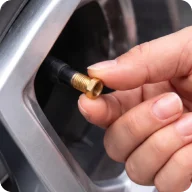
Thread Lock Nuts

Install Sensors

Check for Leaks
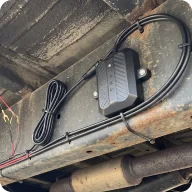
Position Signal Booster (Repeater)

Remove Sensor
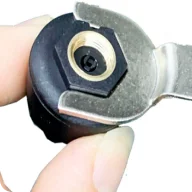
Open Housing
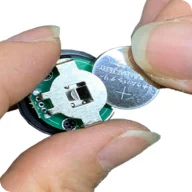
Swap Battery (CR1632)
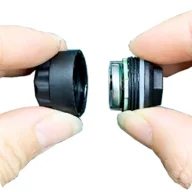
Replace O-Ring & Seal

Reinstall Sensor
FAQs
Yes. This system is designed for a wide range of vehicles with 4, 6, or 8 wheels. It is precision-engineered for Class B/C Motorhomes (like Sprinter or Transit builds), Travel Trailers (such as Airstream or Jayco), and heavy-duty pickups (Ford F-Series, RAM, etc.). As long as your cold tire pressure is under 116 PSI (8.0 Bar), this system is a perfect fit.
Absolutely. You can easily switch the monitor to 8-wheel mode to cover your tow vehicle and a dual or triple-axle trailer simultaneously. For setups exceeding 30 feet in length, we recommend the version with a Signal Repeater to ensure 100% signal stability.
While our system has a powerful 40-meter (131ft) open-air range, the dense metal frame and aluminum skin of many RVs can block radio signals. If your total setup (Truck + Trailer) is longer than 30 feet, a signal booster ensures you never experience "signal dropouts" or delayed readings from your rear tires.
Install 1 Signal Booster for distances over 5m (16ft), 2 over 15m (49ft), and +1 for each trailer towed to ensure optimal coverage.
This is usually because the factory default alarm is set for standard cars (approx. 40 PSI). Since RV tires run at much higher pressures, you simply need to go into the settings and manually adjust your High/Low pressure thresholds to match your tire's specs. Once set, the beeping will stop.
The monitor features Intelligent Start-Stop. It uses a vibration sensor to wake up instantly when you start driving and enters a power-saving standby mode after 10 minutes of inactivity. You don't need to manually turn it on or off every day.
Each sensor uses a high-capacity CR1632 battery that lasts approximately 12 months under standard driving conditions. They are easily replaceable by the user—no need to buy a whole new sensor when the battery runs low.
Yes. The sensors are IP67 waterproof and rated for structural temperatures ranging from -40°F to 257°F (-40°C to 125°C).
This is completely normal. The pre-displayed readings are residual test data from our quality control checks at the factory. Once you install the sensors on your tire valves, the real-time data will automatically overwrite these values.
You can easily change the pressure units by following these steps:
1. In standby mode, press and hold the Center Settings Button for 3 seconds to enter the menu.
2. Short press the Center Button until BAR flashes on the screen.
3. Use the Up/Down Buttons to toggle and select PSI.
4. Press the Center Button once more to confirm and save your setting.
That is a great question, but there is a major technical difference between factory systems and a dedicated heavy-duty setup:
- Indirect vs. Direct Monitoring: Most standard factory vehicles use Indirect TPMS, which doesn't actually measure air pressure. Instead, it uses your car's ABS wheel-speed sensors to estimate if a tire is flat. It will not show you real-time PSI numbers or critical temperature changes on your dashboard.
- The RV & Trailer Blind Spot: Factory TPMS is strictly designed for the 4 tires of your solo vehicle. When you hook up an RV, travel trailer, or fifth wheel, your factory dashboard cannot monitor those towed tires.
Our direct TPMS system gives you real-time, sensor-to-screen precision for both your towing vehicle and your trailer simultaneously, catching dangerous pressure fluctuations before they escalate.
You are absolutely correct that tire age, wear, and structural damage are the leading causes of highway blowouts. Regular tire replacement (every 6–7 years) and visual checks are absolutely essential.
However, a TPMS is not a replacement for maintenance—it is your second pair of eyes on the highway. Even brand-new tires can run over a stray nail, suffer a slow leak, or experience severe internal friction.
While driving, your eyes and common sense cannot detect:
- A slow, silent leak that drops your PSI over 50 miles, overheating the tire wall.
- A sudden temperature spike caused by a sticking brake caliper or bearing failure.
- Rapid decompression before the vehicle begins to fish-tail.
Our TPMS catches these invisible, real-time metrics instantly, giving you the critical minutes you need to pull over safely before a compromised tire catastrophically blows out.
This is completely normal and usually depends on the installation sequence. To ensure instant pairing, always power on your monitor before screwing the sensors onto your tire valves.
If you installed the sensors while the monitor was still turned off, the system will enter its standard background syncing cycle. It may take 10 to 15 minutes of waiting (or a short drive) for the monitor to capture the signal and display the correct, updated tire pressure and temperature.
If you want an instant sync, simply unscrew the sensors, turn on your monitor first, and then screw the sensors back on.
Place the monitor on your dashboard within 3 feet (1 meter) of your driving seat and adjust the angle to face you directly. This ensures optimal screen visibility and quick, glanceable readability without taking your eyes off the road.
This usually happens if the sensors are installed while the monitor is powered off. Always power on the monitor before installing the sensors for instant pairing. If installed while off, it may take up to 10 minutes to sync and display accurate real-time readings.