

How Long Do TPMS Sensors Last — and How Do You Know When to Replace Them?
A sensor that stops transmitting isn't always a dead battery. Here's how to tell the difference — and when replacement is the right call versus waiting.
One position on the TPMS display has stopped showing a reading. The tire looks normal. The vehicle is handling normally. There's no warning light, no alarm, no dramatic indication that anything has changed. It's just gone quiet — one sensor out of however many are being monitored, no longer transmitting. The question every RV owner and commercial truck operator eventually faces is the same: is this a dead battery, a damaged sensor, a pairing issue, or something else entirely? Knowing the answer requires understanding how TPMS sensor systems age, what actually causes them to fail, and what the difference between a low-battery alarm and a complete signal dropout actually means in practice.
The short answer on lifespan is 5 to 7 years under normal use, or approximately 100,000 miles — whichever comes first. The longer answer involves several variables that can cut that lifespan significantly or extend it modestly, depending on how the vehicle is used and where it operates. Understanding those variables is the practical knowledge that lets an owner make an informed replacement decision rather than guessing.
Typical Lifespan
What to Expect Across Three Usage Patterns
Year-Round Daily Use
Commercial trucks and full-time RVs. Continuous operation drains sensor batteries faster and exposes housings to more thermal cycling and road contamination.
Seasonal Recreational Use
RVs used spring through autumn. Sensors spend winter months dormant, which reduces battery drain and thermal stress during the off-season.
Harsh Environments
Coastal salt air, road salt in winter climates, or extreme heat regions. Corrosion attacks valve stem connections and housing seals, accelerating failure independently of battery life.
These ranges assume sensors are functioning in their designed operating environment. Sensors that spend extended periods submerged — on boat trailers during launching and retrieval, for example — typically see the lower end of these ranges due to moisture infiltration at the valve stem junction.
The Critical Distinction
Signal Loss vs Low Battery Alert: What Each One Actually Means
This is the most misunderstood aspect of TPMS maintenance, and the distinction matters for both diagnosis and replacement decisions.
| Alert Type | What's Happening | What to Do |
|---|---|---|
| Low Battery Alert | The sensor's internal battery is approaching end of life and the sensor is proactively transmitting a low-power warning before it goes completely dark. The sensor is still functional — it's telling you it won't be for much longer. | Plan replacement within the next 1–3 months. Sensor is still providing valid readings. |
| Signal Loss / Position Dropout | The monitor is no longer receiving any transmission from that sensor position. The sensor may be dead (battery fully depleted), physically damaged, or have lost its pairing with the monitor. No readings = no protection. | Inspect immediately. This position is currently unmonitored. |
| Intermittent Reading | The position appears and disappears from the display. Typically indicates a sensor nearing the end of battery life, an early housing seal failure allowing moisture in, or a loose valve stem connection. | Investigate and replace soon — intermittent coverage is not reliable coverage. |
| Consistent Incorrect Reading | The position transmits but shows readings that don't match a physical gauge check. Internal sensor calibration may have drifted, or the sensor housing is compromised and pressure measurement is affected. | Verify with gauge. If persistent, replacement required. |
What Accelerates Aging
The Four Factors That Shorten Sensor Life
Thermal Cycling
Every drive cycle expands and contracts the sensor housing slightly. In climates with large temperature swings — hot summers, cold winters — this cycling stresses the housing seals over time, eventually allowing moisture infiltration that attacks the battery contacts and circuit board.
Corrosive Environments
Salt water (coastal areas, boat trailers) and road salt (northern US and Canada winters) attack the valve stem metal and housing connection points. Sensors in these environments can fail structurally before their batteries deplete, producing signal loss without a low-battery warning.
High Annual Mileage
Battery drain is directly proportional to transmission frequency, which is proportional to operating time. A commercial truck driving 100,000 miles per year will exhaust sensor batteries in 3–4 years. An RV covering 15,000 miles per year may see the same sensors last 8–9 years.
Physical Impact and Valve Damage
Curb impacts, tire dismounting during service, and valve stem contamination can damage sensor housings mechanically. A cracked housing admits moisture regardless of how much battery life remains, producing premature failure that looks like a dead battery from the outside.
Replace vs Wait
When to Replace a Single Sensor — and When to Replace the Full Set
Indicators that require immediate action
- Position has dropped off display entirely — sensor dead or disconnected
- Low battery alert on any sensor older than 5 years
- Readings consistently disagree with physical gauge check
- Visible corrosion or physical damage on valve stem
- Intermittent signal from any position
- Vehicle operates in corrosive environment year-round
Indicators that allow planned replacement
- Low battery alert on sensors under 4 years old
- All positions transmitting consistently
- Readings match gauge checks at all positions
- No corrosive environment exposure
- Seasonal use with dormant winter storage
- System under 4 years old with no alerts
The Full Range
Three Systems, Three Vehicle Types
Grundig RV TPMS
116 PSI, 4/6/8-wheel. Direct sensors with low-battery alert before dropout. Real-time pressure and temperature. $119.
$119
Shop Now →Solar TPMS 6-Wheel
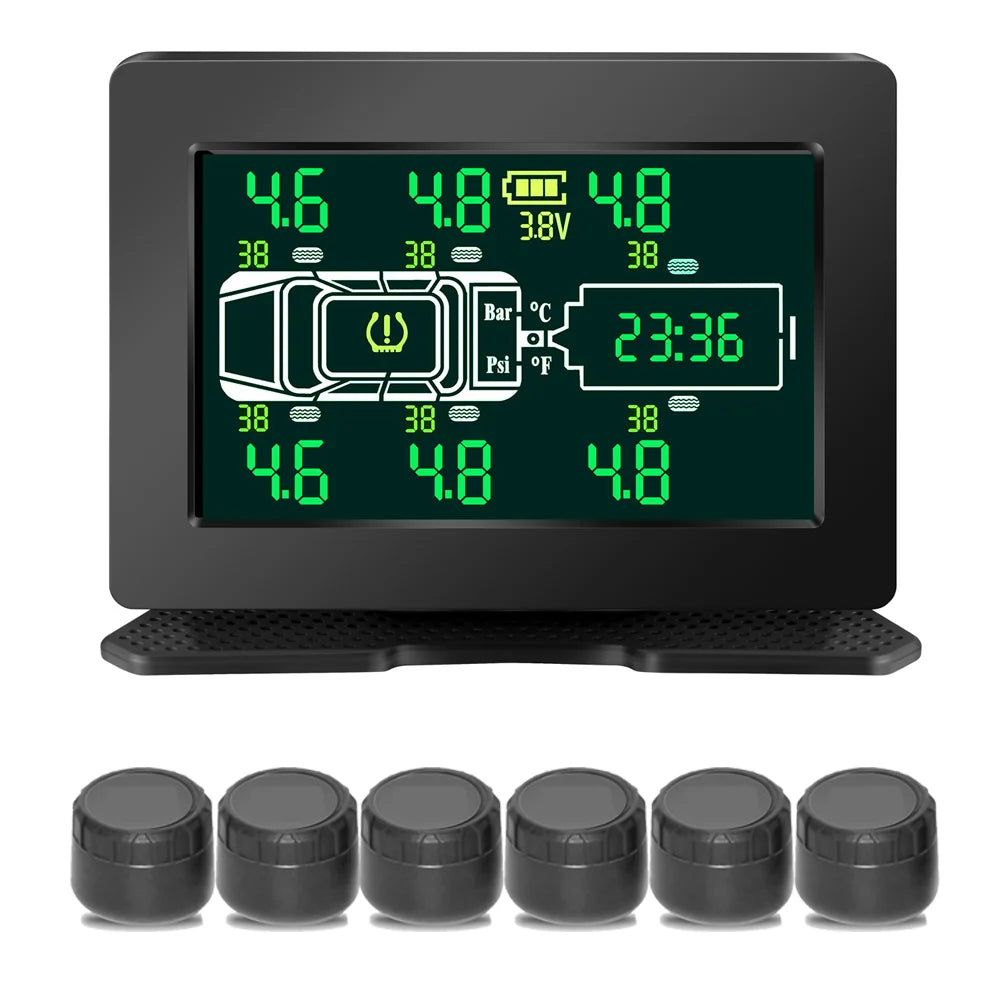
Solar + USB monitor charging. 6 direct sensors. Low-battery and signal-loss alerts. Designed for daily commercial operation.
See product
Shop Now →Grundig S08 TPMS
218 PSI, 8/12-wheel. Purpose-built sensors for heavy commercial pressures and mileage. Full alert suite including sensor battery warning. $259.
$259
Shop Now →Replace before the signal goes silent — not after. Full sensor sets · Free shipping · All configurations
Shop All TPMS →