


De TPMS-strategie voor een cross-country roadtrip: bandenspanning beheren in verschillende klimaatzones
Een reis van Texas naar Montana omvat een omgevingstemperatuurbereik van 50°F. De bandenspanning die bij vertrek in de hitte van de Gulf Coast correct was, is niet dezelfde waarde die je op hoogte in de Rocky Mountains nodig hebt.
Een rit van één dag binnen één klimaatzone biedt een voorspelbare omgeving voor de bandenspanning. Een meerdaagse cross-countryreis niet. Tijdens een rit van Houston naar Glacier National Park krijg je te maken met zomerse hitte op de vlaktes van Texas, hoogtewinst bij bergpassen in Colorado, een droge bergwoestijn in Wyoming en mogelijk temperaturen onder het vriespunt 's nachts in Montana — allemaal binnen vijf dagen. Elke verandering van zone leidt tot een andere uitgangswaarde voor de bandenspanning, een andere interpretatie van alarmdrempels en tegelijk een ander risicoprofiel voor een te lage en te hoge bandenspanning. Een realtime bandenspanningscontrolesysteem dat continu druk- en temperatuurgegevens levert onder alle rijomstandigheden, is het enige hulpmiddel dat deze veranderingen tijdens een reis door meerdere zones nauwkeurig volgt, in plaats van alleen op het vertrekpunt onder één bepaalde set omstandigheden.
Deze gids brengt de specifieke beslissingen rond bandenspanningsbeheer in kaart die in elke fase van een representatieve cross-countryreis ontstaan, inclusief de TPMS-strategie voor elke overgang tussen zones. De route, het voertuig en de omstandigheden zijn representatieve voorbeelden — de principes zijn van toepassing op elke meerdaagse reis met aanzienlijke variaties in temperatuur of hoogte.
Het effect van klimaatzones
Hoeveel kan de bandenspanning veranderen tijdens een vijfdaagse cross-countryroute?
| Zone / locatie | Typisch temperatuurbereik | Hoogte | Drukeffect ten opzichte van de basiswaarde op zeeniveau bij 65°F |
|---|---|---|---|
| Gulf Coast, Texas (vertrek) | 88–95°F | Zeeniveau | +2–3 PSI door warmte (vertrek met de juiste koude bandenspanning) |
| Vlaktes van Oklahoma / Kansas | 82–90°F + warmte midden op de dag | 1.000–3.000 ft | +1 PSI door hoogte, +2 PSI door warmte = in totaal +3 PSI ten opzichte van de basiswaarde |
| Front Range van Colorado (5.000 ft) | 65–78°F | 5.000 ft | +1,3 PSI door hoogte, –1 PSI door koelere temperatuur = netto ongeveer +0,3 PSI |
| Bergpas in de Rocky Mountains (10.000+ ft) | 45–60°F | 10.000+ ft | +2,2 PSI door hoogte, –2 PSI door koelere temperatuur = netto ongeveer +0,2 PSI — maar remwarmte tijdens de afdaling voegt +3–4 PSI toe |
| Hooggelegen woestijn van Wyoming | 55–75°F / daalt 's nachts tot 40°F | Gemiddeld 6.500 ft | Aanzienlijke daling van de nachttemperatuur — 3–5 PSI verlies bij vertrek in de ochtend |
| Montana (aankomst) | Overdag 50–65°F / 's nachts 35–45°F | Gemiddeld 3.500 ft | Aanzienlijk koeler dan de vertrekzone — ochtenddruk 5–8 PSI lager dan de koude specificatie voor Texas |
Strategie per dag
Wat je in elke fase moet controleren en aanpassen
Vlaktes van TX
Vertrek in zomerse hitte — stel de koude bandenspanning in voordat de dag opwarmt
Vertrek vroeg in de ochtend, voordat de omgevingstemperatuur zijn hoogtepunt bereikt. Stel de koude bandenspanning correct in tussen 6.00 en 7.00 uur, niet halverwege de ochtend. Tegen de tijd dat het voertuig de autosnelheid bereikt, nemen de warmte door wrijving en de omgevingstemperatuur al toe. Houd in de middag in de gaten of de druk de bovengrens nadert — de juiste reactie is snelheid verminderen, niet lucht laten ontsnappen. Controleer aan het einde van de vertrekdag of alle waarden binnen het bereik liggen voordat je stopt.
Klim in CO
Hoogtewinst — verwacht een schijnbare drukstijging zonder toevoeging van lucht
Naarmate je via de Front Range de Rocky Mountains in rijdt, zullen de meterwaarden ongeveer 0,5 PSI per 1.000 voet stijgen — niet omdat er lucht is toegevoegd, maar omdat de atmosferische druk is afgenomen. De TPMS zal deze schijnbare stijging weergeven. Laat op hoogte geen lucht ontsnappen om deze waarden te 'corrigeren'. Controleer de koude bandenspanning de volgende ochtend op de hoogte van de tussenstop om de juiste basiswaarde voor die hoogte vast te stellen.
Bergpas
Afdaling in de bergen — controleer de temperatuurmetingen voor en na de afdaling
Controleer de TPMS-metingen voordat je aan een aanzienlijke afdaling in de bergen begint. Als de druk door de combinatie van het hoogte-effect en de warmte door wrijving tijdens het klimmen dicht bij de bovengrens ligt, stop dan en laat de banden afkoelen voordat je afdaalt. Tijdens de afdaling zorgt remwarmte voor extra druk boven op de al verhoogde basiswaarde. Houd de temperatuurmetingen actief in de gaten — een verhoogde temperatuur op specifieke posities tijdens de afdaling wijst erop dat remwarmte aan de bandenconstructie wordt overgedragen.
Overnachting in WY
Koude tussenstop gedurende de nacht — pas de ochtenddrempelwaarden aan
In de hoge woestijn van Wyoming daalt de nachttemperatuur vaak 30–40°F onder de maximumtemperatuur overdag. Een voertuig dat 's nachts geparkeerd staat, heeft 's ochtends banden die 3–5 PSI lager zijn dan de metingen van de vorige avond. Controleer het TPMS vóór vertrek en corrigeer elk druktekort — vooral belangrijk als de nachttemperatuur aanzienlijk lager was dan de omstandigheden waarvoor de drempelwaarden oorspronkelijk waren ingesteld.
Aankomst in Montana
Koelste omstandigheden van de rit — juiste basiswaarde opnieuw vaststellen
Bij aankomst in de koelste en mogelijk hoogstgelegen zone van de rit zal de koude bandenspanning 's ochtends aanzienlijk lager zijn dan de basiswaarde bij vertrek uit Texas — zowel door de lagere temperatuur als door de correctie voor de hoogte. Stel de juiste bandenspanning voor de werkelijke omstandigheden op deze locatie vast. De TPMS-drempelwaarden moeten mogelijk worden bijgewerkt om de nieuwe basiswaarde weer te geven als de omstandigheden in Montana de komende dagen de werkomgeving zijn.
De systemen
Monitoring tijdens ritten door het hele land voor elke configuratie
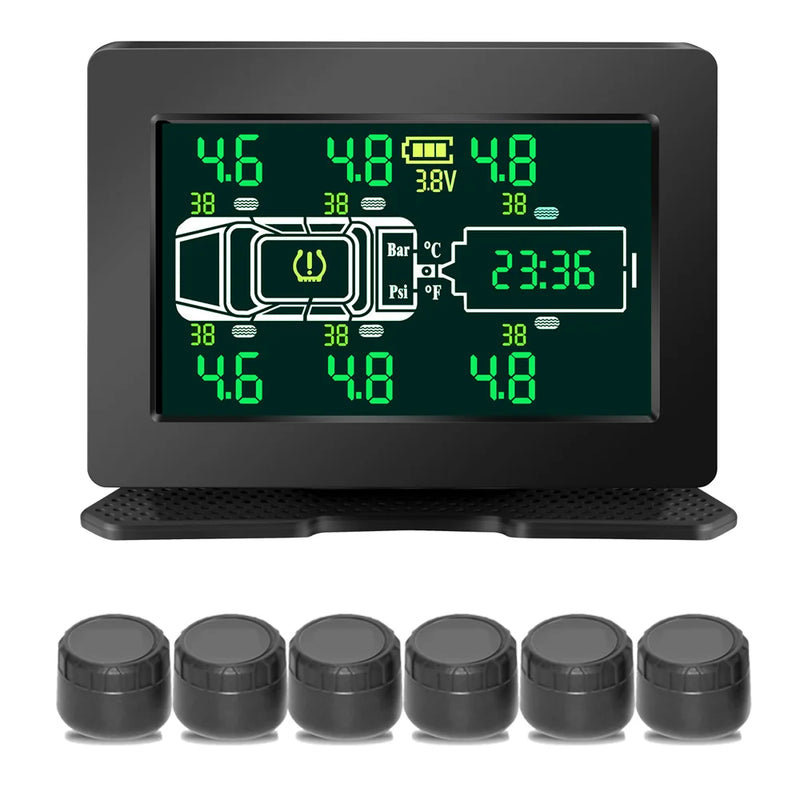
Grundig RV TPMS
4/6/8 wielen
Bereik van 116 PSI. Realtime registratie van druk en temperatuur volgt alle variaties tussen klimaatzones tijdens een rit door het hele land. Voor 4/6/8 wielen — geschikt voor configuraties met een camper en getrokken voertuig. $119.
$119
Nu kopen →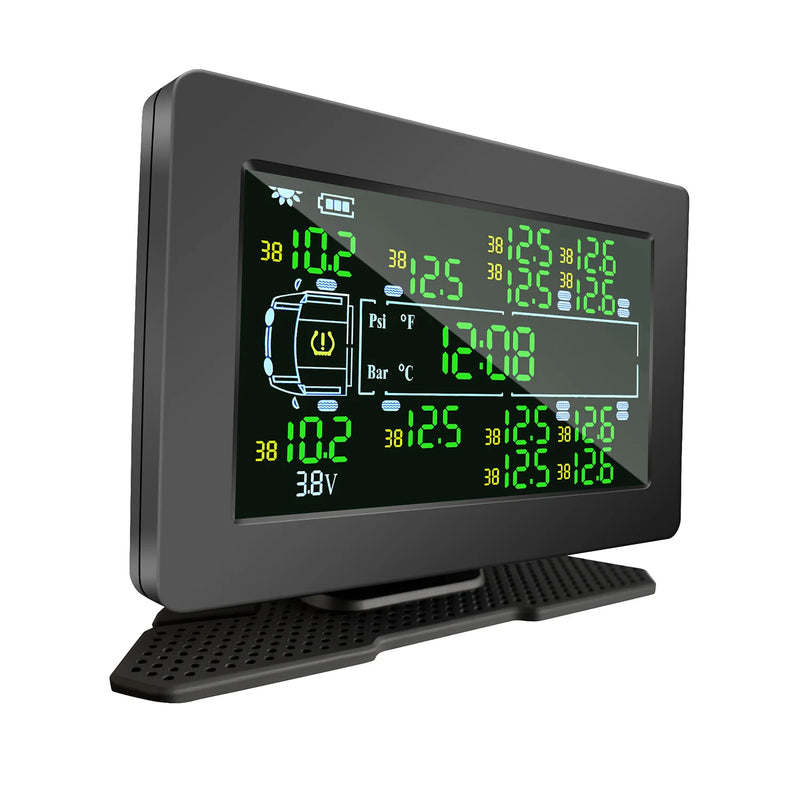
Grundig S08 TPMS
8/12 wielen
Een bovengrens van 218 PSI voor Class A-dieselcampers, waarbij de zomerhitte in Texas in combinatie met bergachtige hoogte en remwarmte de bedrijfsdruk richting de vereiste overcapaciteit van de S08 kan duwen. $259.
$259
Nu kopen →Bekijk het volledige Grundig TPMS-assortiment om vóór vertrek voor een rit door het hele land te controleren welk systeem geschikt is voor de drukspecificatie en wielconfiguratie van je voertuig.
Houd elke klimaatzone in de gaten — niet alleen de zone waaruit je bent vertrokken. RV TPMS $119 · S08 $259 · Gratis verzending
RV TPMS kopen →