


Heavy-Duty-TPMS: Warum 8/12-Rad-Systeme nicht mit Pkw-Sensoren vergleichbar sind
218 PSI. 12 Räder. Lasten eines Class-A-Diesel-Wohnmobils. Das unterscheidet speziell entwickelte Heavy-Duty-TPMS von Systemen, die einfach nicht die Werte erreichen, die Sie tatsächlich benötigen.
Das Reifendrucküberwachungssystem in Ihrem Pkw arbeitet zwischen 30 und 50 PSI. Ein Class-A-Diesel-Wohnmobil fährt seine Hinterreifen bei voller Beladung mit 100–120 PSI. Ein Wohnmobil auf einem Freightliner- oder Spartan-Fahrgestell kann bei voller Beladung mit Doppelhinterreifen Drücke von bis zu 120 PSI erreichen, wobei die Achslasten jeden Reifen einer dauerhaften Belastung aussetzen, die Pkw-Sensoren nie messen sollten.
Das ist kein marginaler Unterschied. Ein TPMS, das auf 87 PSI ausgelegt ist – die Obergrenze vieler Verbrauchersysteme, die zusammen mit Wohnmobilzubehör verkauft werden –, kann den Betriebsdruck eines beladenen Hinterreifens eines Class A nicht erfassen. Es zeigt entweder einen Fehler an, liest gar nichts oder liefert Werte, die in keiner Beziehung zu dem stehen, was Ihren Reifen bei Autobahngeschwindigkeit tatsächlich passiert. Das Grundig S08 Heavy-Duty RV TPMS ist für 218 PSI ausgelegt und unterstützt umschaltbare 8- und 12-Rad-Konfigurationen – von Grund auf für die Druckbereiche und Achszahlen entwickelt, die den ernsthaften Schwerlastbetrieb von Wohnmobilen und Nutzfahrzeugen definieren.
Zu verstehen, warum die Überwachung bei Schwerlastanwendungen speziell entwickelte Hardware erfordert – und nicht nur ein teureres Verbrauchersystem –, beginnt mit der Physik dessen, was Ihre Reifen unter Last tatsächlich leisten und was sich ändert, wenn diese Werte groß werden.
Der wesentliche Unterschied
Was 218 PSI tatsächlich bedeutet – und warum es wichtig ist
Pkw-Reifen tragen 450–700 kg pro Reifen bei 35 PSI. Ein beladener Hinterreifen eines Class-A-Wohnmobils trägt 1.500–2.000 kg pro Reifen bei 100–120 PSI. Die dabei wirkenden Kräfte sind nicht vergleichbar, ebenso wenig die Folgen eines Überwachungsfehlers.
Bei Autobahngeschwindigkeit auf einem schweren Fahrgestell führt ein Reifen, der 15 PSI unter seinen Mindestdruck fällt — eine Veränderung, die sich über 30–60 Minuten mit einem langsamen Leck allmählich vollzieht — zu einer Lastverlagerung auf die Reifenflanke, erzeugt Hitze in den Karkasslagen und schafft die Voraussetzungen für einen katastrophalen strukturellen Ausfall. Bei einem Fahrzeuggewicht von über 40.000 Pfund ist dies kein Straßenrandärgernis. Es ist ein lebensgefährliches Ereignis, das den Anhänger, entgegenkommende Fahrspuren und das Fahrzeug selbst betreffen kann.
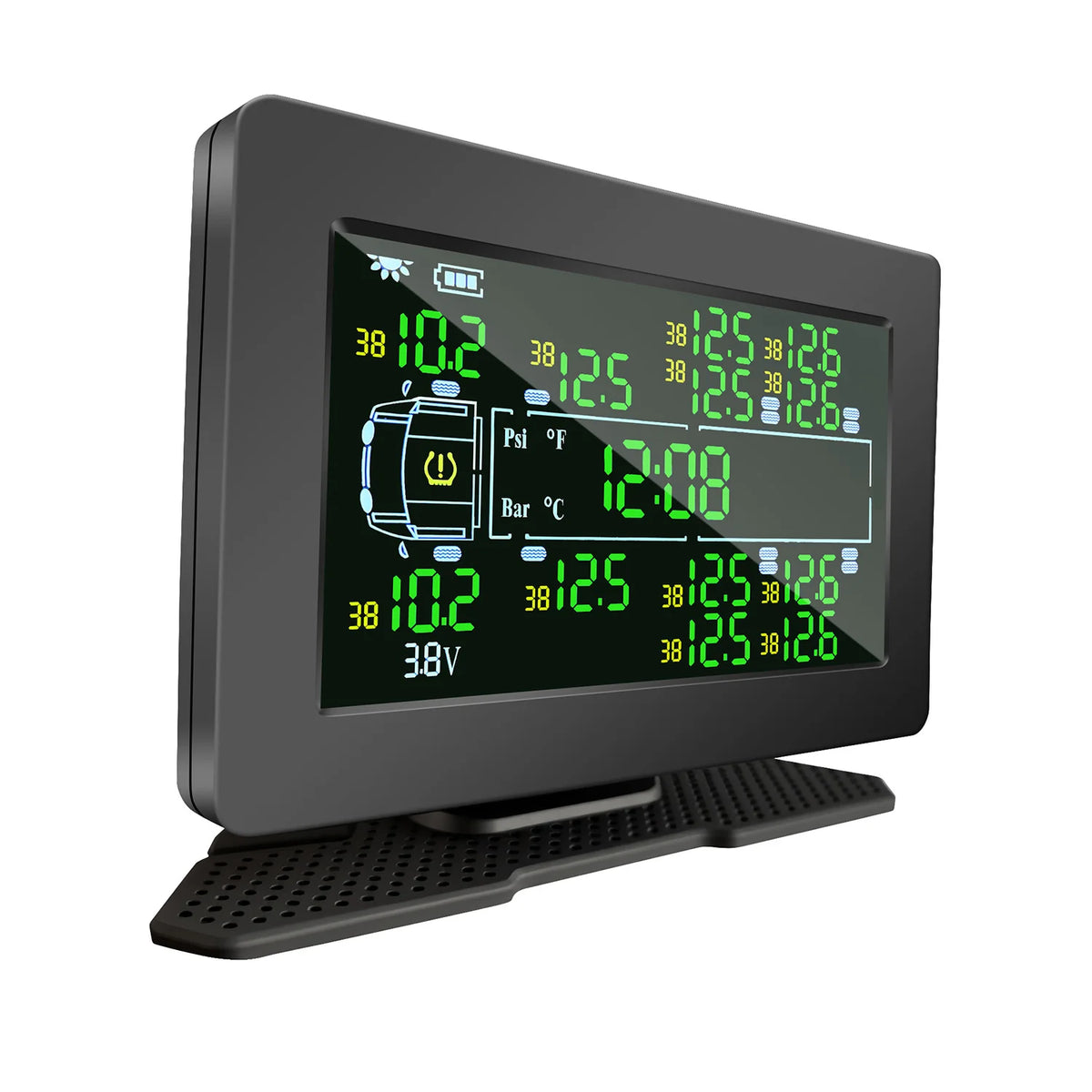
Spezifikationsvergleich
Personenwagensensoren vs. Heavy-Duty-TPMS: Was sich ändert
| Spezifikation | Personenwagen-TPMS | Standard-Wohnmobil-TPMS | Grundig S08 Heavy-Duty |
|---|---|---|---|
| Maximaler PSI-Bereich | ~50 PSI | 116 PSI | 218 PSI |
| Radanzahl | Nur 4 Räder | 4/6/8 umschaltbar | 8/12 umschaltbar |
| Sensorhaltbarkeit | Personenwagen-belastet | Wohnmobil-belastet | Schwerlast-zertifiziert |
| Geeignet für Klasse A Diesel | Nein — PSI-Grenze zu niedrig | Grenzwertig — Hinterachsdruck prüfen | Ja — vollständige Abdeckung |
| Unterstützung für doppelte Hinterreifen | Nein | Bis zu 8 Räder | Bis zu 12 Räder |
| Geeignet für Nutzfahrgestelle | Nein | Begrenzt | Ja — speziell entwickelt |
Wer braucht das S08
Fahrzeugtypen, die eine Heavy-Duty-TPMS-Abdeckung benötigen
Klasse A Diesel-Pusher
Freightliner, Spartan, Tiffin, Newmar, Entegra. Hinterachsdruck 100–120 PSI bei voller Beladung. Doppelte Hinterreifen erfordern 12-Rad-Abdeckung mit Zugfahrzeug.
Nutzfahrgestell-Wohnmobile
Fahrzeuge auf Fahrgestellen von Nutzfahrzeugen mit Standard-Achslastbewertungen. Die Drücke überschreiten oft 120 PSI an den Hinterachsen bei gesetzlich zulässigen Lastgrenzen.
Schwere Dually + Anhänger-Kombinationen
Ford F-450/F-550, Ram 5500 oder GMC 4500 mit Tandem-Achsen-Fünftelanhänger. Mindestens 8 Räder, 12 Räder bei zusätzlichen Anhängerachsen.
Klasse A + Toad-Kombinationen
Ein Diesel-Pusher, der ein Beiboot zieht, fügt 4 weitere Räder hinzu, die überwacht werden müssen. Der 12-Rad-Modus des S08 deckt die komplette Kombination in einem einzigen System ab.
S08 Hauptspezifikationen
Die Zahlen hinter dem System
Die Automobiltechnik-Tradition von Grundig – 80 Jahre von der Gründung 1945 über das Autosuper 248 Car-Audio-System von 1951 bis zur heutigen TPMS-Reihe – prägt die Komponenten-Spezifikationsphilosophie hinter dem S08. Sensoren, die für den Dauerbetrieb bei hohen Drücken ausgelegt sind, benötigen eine andere interne Konstruktion als solche, die für den 30–50-PSI-Bereich von Pkw optimiert sind. Die S08-Sensoren sind für die dauerhafte mechanische Belastung von Hochdruck-Schwerlastreifen über den Temperaturbereich ausgelegt, dem die Reifen eines Diesel-Wohnmobils im realen Betrieb tatsächlich ausgesetzt sind.
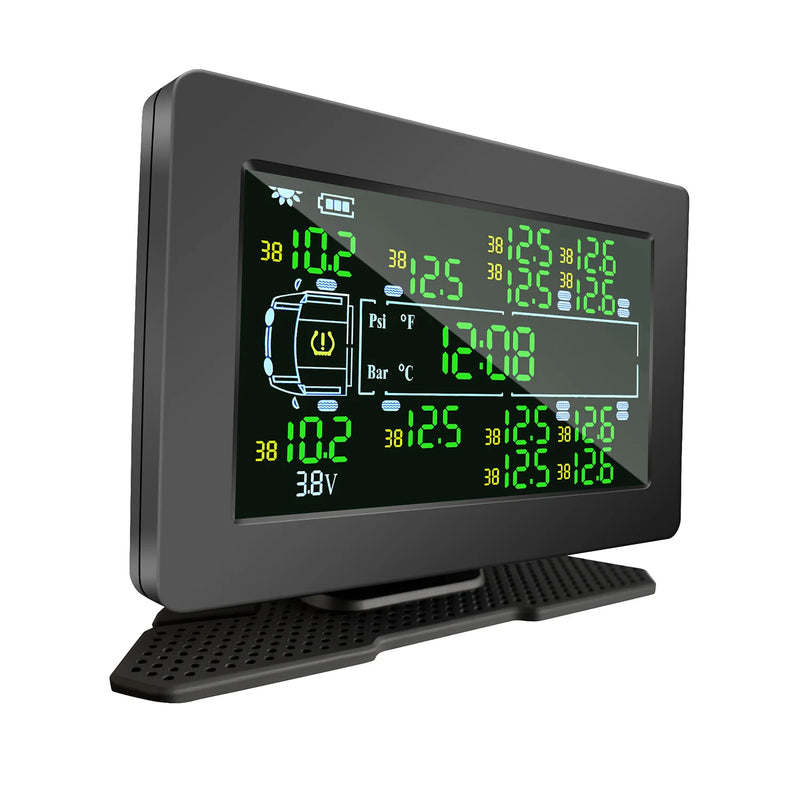
Grundig S08
Robustes RV TPMS
Maximalbereich 218 PSI. Umschaltbar für 8/12 Räder. Speziell entwickelt für Class A Diesel-Wohnmobile, kommerzielle Fahrgestell-Wohnmobile und schwere Dually-Kombinationen. Echtzeitüberwachung von Druck und Temperatur mit vollständigem Alarmsystem. Kostenloser Versand.
$259
Jetzt kaufen →Entscheidungshilfe
S08 oder Standard RV TPMS – Wie wählen?
Die Entscheidung hängt von zwei Zahlen ab: dem maximalen Reifendruck Ihrer Hinterachse und der Gesamtzahl der Räder einschließlich Anhänger oder Beiwagen. Wenn beide Zahlen innerhalb der 116-PSI- und 8-Räder-Grenze liegen, ist das Standard Grundig RV TPMS für 119 $ das passende System. Überschreitet eine der Zahlen diese Grenzen, ist das S08 für 259 $ kein Upgrade – es ist die Mindestanforderung für eine zuverlässige Überwachung Ihres Fahrzeugs.
Durchstöbern Sie die komplette Grundig TPMS-Reihe, um den vollständigen Spezifikationsvergleich aller Systeme zu sehen. Die richtige Frage lautet nicht „Welches System ist besser?“, sondern „Welches System kann meine Reifen tatsächlich auslesen?“
218 PSI. 12 Räder. Echtzeitschutz. Kostenloser Versand · Umschaltbar für 8/12 Räder · Für Class A Diesel zugelassen
S08 TPMS kaufen →