


Warum Teslas Frunk immer noch keinen Soft-Close hat
Soft-Close ab Werk
Und was das über Teslas Entscheidungsfindung aussagt, wo die Aftermarket-Möglichkeit liegt und was es tatsächlich kostet, diese Lücke selbst zu schließen.
Tesla baut einige der technisch anspruchsvollsten Konsumentenfahrzeuge aller Zeiten. Der Frunk – ein abschließbares, wetterfestes Staufach an der Stelle, die bei den meisten Autos für den Motor reserviert ist – ist selbst ein Produkt dieser Raffinesse. Warum schließt er dann mit einem manuellen Druck und einem dumpfen Knall, genau wie ein Kombi aus den 1990er Jahren?
Die Antwort ist nicht, dass Tesla Soft-Close-Mechanismen nicht kennt. BMW, Mercedes und Audi bieten seit Jahren Soft-Close-Türen und -Kofferräume an. Die Antwort ist, dass Tesla eine bewusste Entscheidung getroffen hat – und das Verständnis dieser Entscheidung erklärt genau, wo die Aftermarket-Soft-Close-Lösung ihren Platz hat, warum sie existiert und warum sie kostet, was sie kostet.
Teslas Kalkulation
Vier Gründe, warum der werkseitige Frunk so schließt, wie er es tut
Kosten in großem Maßstab machen Soft-Close unerschwinglich
Ein Soft-Close-Mechanismus verursacht bei Automobilproduktionsmengen etwa 80–150 US-Dollar Materialkosten pro Fahrzeug – vor Arbeits-, Integrations- und Garantie-Kostenmodellierung. Tesla baut jährlich Hunderttausende Fahrzeuge. Für Model 3 und Model Y zusammen würde die werkseitige Soft-Close-Ausstattung des Frunks jährliche Mehrkosten in Millionenhöhe bedeuten. Diese Kosten würden entweder die Marge verringern oder den Fahrzeugpreis erhöhen – beides passt nicht zu Teslas Strategie für den Massenmarkt.
Tesla priorisiert softwaredefinierte Funktionen über Hardware-Verbesserungen
Teslas Produktentwicklung konzentriert sich auf Antriebsstrang, Software, Autonomie und Fertigungseffizienz. Hardware-Verbesserungen, die das tägliche haptische Erlebnis betreffen – Türschließqualität, Frunk-Dichtung, Innenmaterialgefühl – werden im Vergleich zu Reichweite, Ladegeschwindigkeit und Software-Fähigkeiten konsequent zurückgestellt. Das ist eine bewusste Produktphilosophie, kein Versehen. Die Wettbewerbsvorteile des Autos liegen nicht in der Hardware-Finish-Qualität.
Der Frunk ist ein Bonusmerkmal, kein Verkaufsargument
Der Frunk existiert, weil der elektrische Antriebsstrang den vorderen Bereich des Autos frei lässt – es ist ein Vorteil der Architektur, kein Merkmal, das Tesla aktiv bewirbt. Da der Frunk nicht als Hauptmerkmal verkauft werden muss, besteht kein Marketingzwang, ihn auf dem gleichen Niveau wie ein dediziertes Luxus-Laderaumsystem zu gestalten. Er funktioniert. Er schließt. Für die meisten Käufer ist das zum Kaufzeitpunkt ausreichend.
After-Sale-Zubehör ist eine bekannte Einnahmequelle
Automobilhersteller, einschließlich Tesla, verstehen, dass das Belassen bestimmter Funktionen auf einem ausreichenden statt einem Premium-Niveau einen Markt für Aftermarket-Upgrades schafft. Das ist kein Zynismus – es ist die Struktur, wie Automobilzubehörmärkte schon immer funktioniert haben. Die Lücke zwischen „ab Werk ausreichend“ und „hervorragend nach einem 135-$-Upgrade“ ist der Bereich, in dem Unternehmen wie Grundig Auto tätig sind.

Der Luxusvergleich
Warum BMW und Mercedes es integrieren – und was es sie tatsächlich kostet
Soft Close ab Werk als Standard oder Option
Luxushersteller integrieren Soft-Close-Türen und -Kofferräume, weil taktile Verfeinerung zentral für ihr Wertversprechen ist. Die Kosten werden in einen Fahrzeugpreis eingerechnet, bei dem 100–150 $ pro Schließmechanismus nur einen Bruchteil eines Prozents des Kaufpreises ausmachen – und direkt die Kernbehauptung der Marke nach Premiumqualität bei jeder Interaktion unterstützen.
Ab Werk ausreichend, Aftermarket schließt die Lücke
Teslas Wertversprechen basiert auf Leistung, Reichweite, Software und Gesamtkosten des Besitzes – nicht auf der Verfeinerung einzelner physischer Interaktionen. Bei Teslas Preis- und Volumenkombination hat derselbe Betrag von 100–150 $ pro Fahrzeug eine ganz andere strategische Bedeutung. Die Lücke, die dadurch entsteht, ist genau der Raum, den das Grundig-Aftermarket-Upgrade füllt.
Was das für Sie bedeutet
Die Lücke ist real, konsistent und behebbare
Zu verstehen, warum Tesla ab Werk keine Soft-Close-Funktion anbietet, klärt etwas Wichtiges: Dies ist kein Designfehler, der in einem zukünftigen Update behoben wird. Es ist eine Kosten- und Priorisierungsentscheidung, die Tesla konsequent über mehrere Model 3- und Model Y-Refresh-Zyklen hinweg getroffen hat. Das Highland-Refresh hat die Soft-Close-Funktion für den Frunk nicht hinzugefügt. Auch beim nächsten Refresh wird dies voraussichtlich nicht der Fall sein.
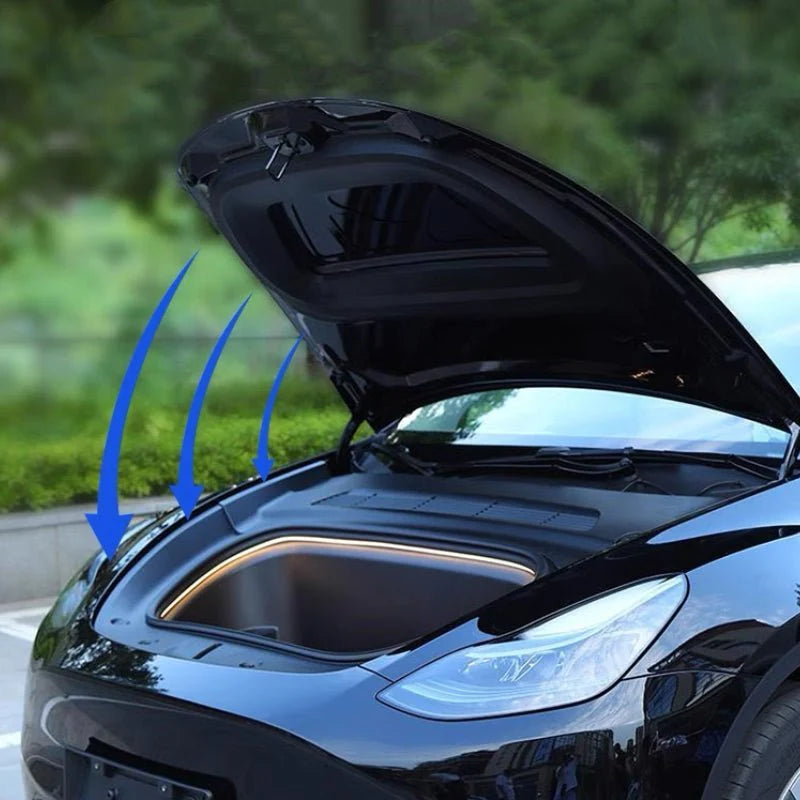
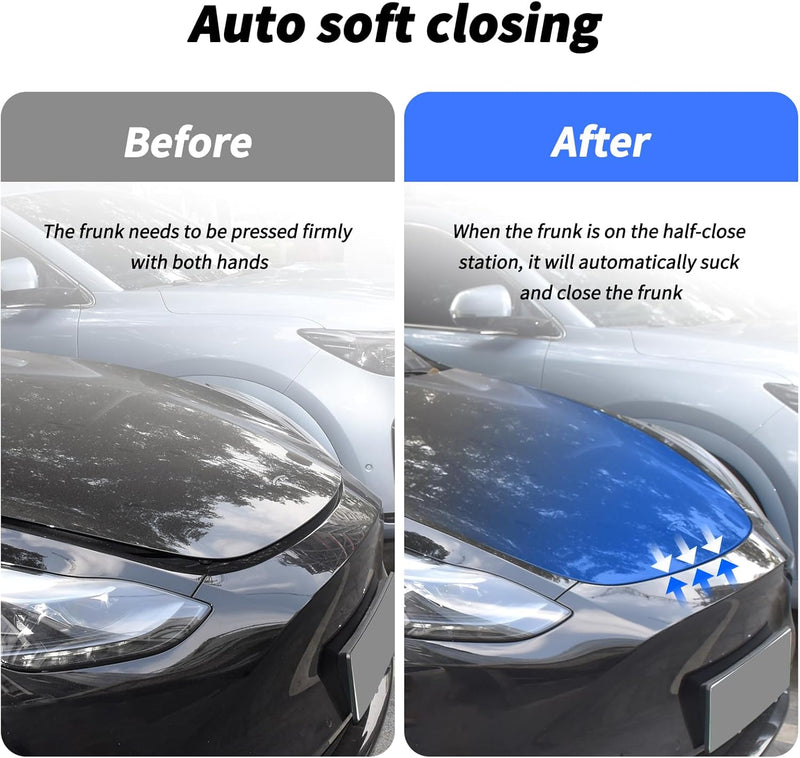
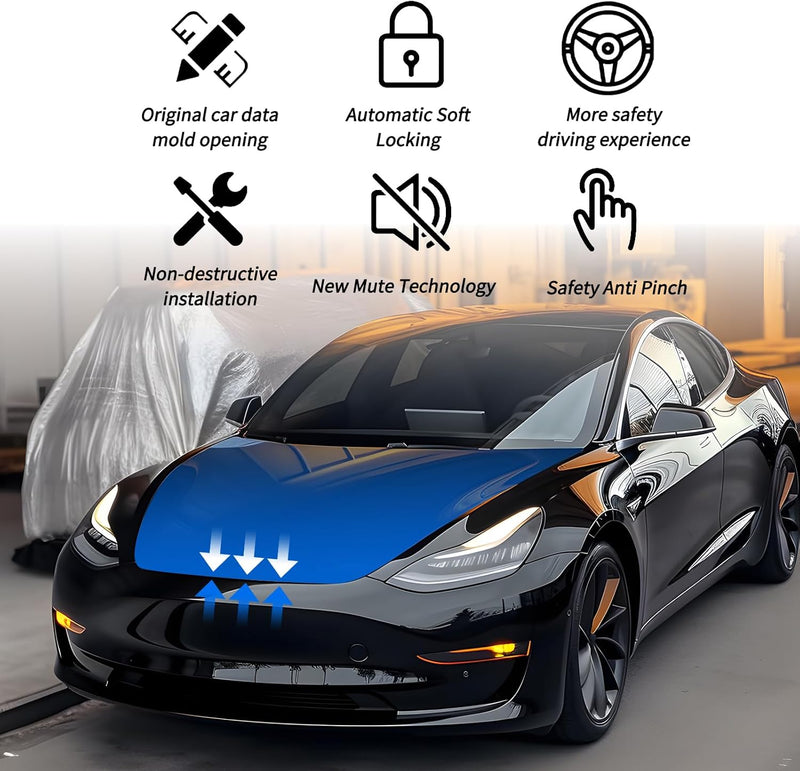
Das bedeutet, dass die Lücke für die aktuelle Generation von Besitzern dauerhaft ist – und die Frunk-Steuerungs-Upgrades im Aftermarket der einzige Weg sind, sie zu schließen. Die Grundig-Lösung schließt sie vollständig: der magnetische Mechanismus, das PA66-GF30-Gehäuse, die drei Auslösemethoden, die 15-minütige Installation. Für 135 $ erhalten Sie, was Tesla nicht bereitgestellt hat – nicht als Notlösung, sondern als speziell entwickeltes Bauteil, das perfekt zum Fahrzeug passt.
Grundig Power Frunk
Soft-Close-Verriegelung
Die Aftermarket-Lösung für die werkseitige Lücke, die Tesla nicht schließen wollte. Magnetische Selbstabdichtung ab 5 mm. PA66-GF30-Gehäuse, Betrieb unter 50 dB, 3 Auslösemethoden. Plug-in-Installation, kein Bohren. Passend für Model 3 / Y / X / S.
$135 $159
Jetzt kaufen →Das Fazit
Tesla hat eine rationale Entscheidung getroffen. Das können Sie auch.
Tesla hat sich entschieden, Soft-Close im Frunk nicht einzubauen, weil die Kosten-Nutzen-Rechnung bei ihrer Produktionsmenge und Preispositionierung dies nicht rechtfertigte. Das ist eine rationale Entscheidung von Tesla. Es ist auch eine rationale Entscheidung für den einzelnen Besitzer, diese umzukehren – bei 135 $ sieht die Kostenrechnung anders aus. Sie zahlen nicht für eine komplette Produktionsserie. Sie zahlen für ein Fahrzeug, ein Upgrade, eine tägliche Interaktion, die Sie hunderte Male im Jahr wiederholen.
Die werkseitige Lücke existiert aufgrund der Bauweise von Tesla. Die Aftermarket-Lösung existiert aufgrund der Nutzung durch einzelne Besitzer. Beide Tatsachen sind wahr, und die Tesla-spezifische Upgrade-Reihe bei Grundig Auto basiert genau auf diesem Prinzip: die Lücken zwischen Teslas technischen Prioritäten und dem tatsächlichen Alltagserlebnis des Autobesitzes zu schließen. Das Soft-Close im Frunk ist das deutlichste Beispiel für diese Lücke – und die einfachste, sie zu schließen.
Schließen Sie die Lücke, die Tesla offen gelassen hat 135 $ · Kostenloser Versand · 15–20 Min. Installation · Alle Tesla-Modelle
Soft-Close-Verriegelung kaufen →