
Wohnmobil-TPMS: brauchen Sie wirklich eins?
Eine verständliche Übersicht zur Reifendrucküberwachung für Wohnmobile, Reiseanhänger, Fifth Wheels und Camper — was es kann, ob Ihr Wohnmobil es schon hat und welche Ausstattung zu Ihrem Fahrzeug passt.
Hat Ihr Wohnmobil das schon?
Zwei Fragen, die Sie vor dem Kauf eines Kits beantworten sollten.
Werks-TPMS vs. Nachrüst-TPMS
Die meisten Zugfahrzeuge sind mit indirektem TPMS ausgestattet, das einen Platten anhand von ABS-Raddrehzahldaten schätzt, statt den tatsächlichen Druck zu messen — und es überwacht nur die eigenen vier Reifen des Fahrzeugs.
Es zeigt keinen Live-PSI-Wert, erkennt keinen langsamen Luftverlust frühzeitig und hat keine Sicht auf einen gezogenen Anhänger, ein Fifth Wheel oder die Hinterachse eines Wohnmobils. Ein Nachrüst-TPMS liest jeden Reifen direkt aus und zeigt alle auf einem Bildschirm an.
Interne vs. externe Sensoren
Externe Sensoren werden wie eine Staubkappe auf das Ventil geschraubt — einfache DIY-Installation, aber wetteranfällig und etwa einmal jährlich zu wechseln.
Interne Sensoren werden im Reifen montiert und ersetzen das Ventil — genauer, diebstahlsicher und längere Batterielaufzeit, aber die Montage erfordert eine Reifenwerkstatt, da das Rad abgenommen werden muss.
Jedes Grundig Wohnmobil-TPMS-System an einem Ort
Von 4-Rad-Campervans bis zu 12-Rad-Klasse-A-Diesel-Pushern — wählen Sie den Druckbereich und die Sensoranzahl passend zu Ihrem Fahrzeug.
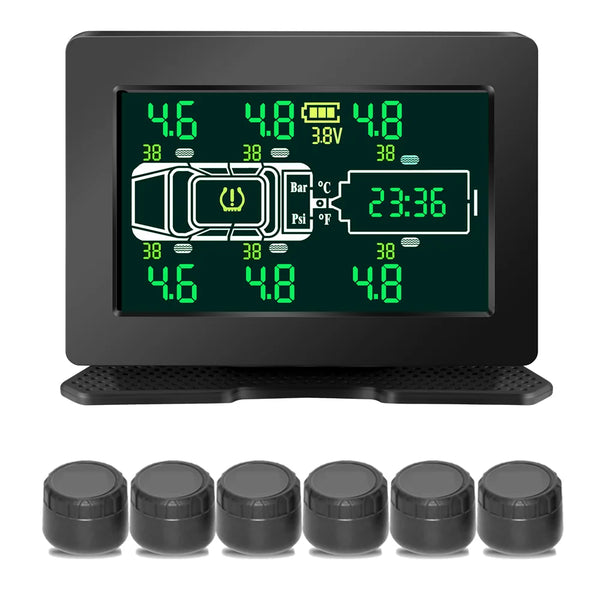 4/6/8 Räder · 116 PSI
GRUNDIG Wohnmobil-TPMS
Umschaltbare 4/6/8-Rad-Anzeige, 40 m Langstreckensignal, IP67-Sensoren.
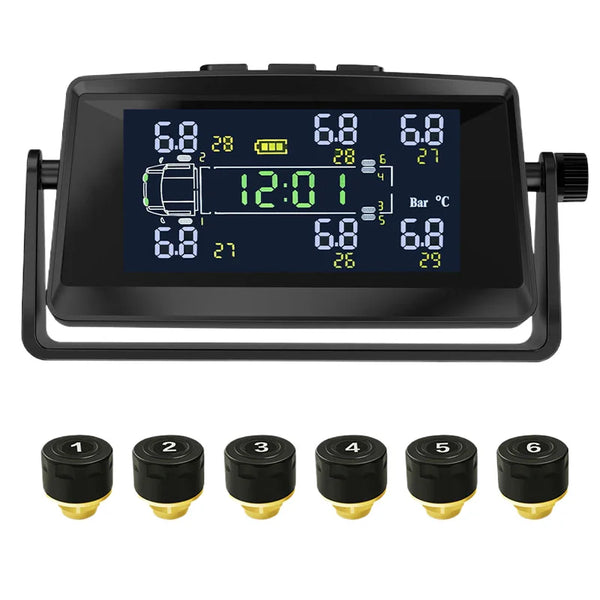 6 Sensoren · Bis zu 217 PSI
Solarbetriebenes TPMS
Solar- + Typ-C-Doppelaufladung für Dually-Trucks und schwere Wohnmobile.
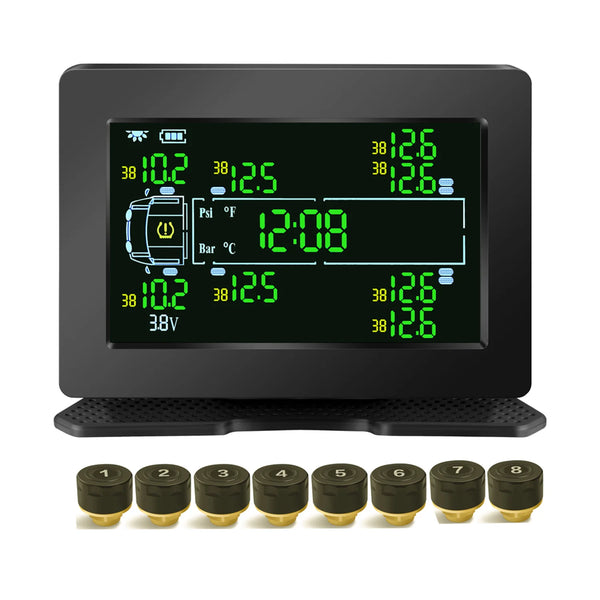 8/12 Räder · Bis zu 217 PSI
Grundig S08 Heavy-Duty TPMS
Für Klasse A/C Wohnmobile, Dreiachser-Fifth Wheels und Nutzfahrzeuge.
4/6/8 Räder · 116 PSI
Wohnwagen-TPMS
Abgestimmt auf Wohnwagen und Wohnmobile, 40 m Reichweite, 5,0" HD-Display.
Egal, was Sie fahren
Die gleiche Sensorplattform, abgestimmt auf vier verschiedene Fahrzeugtypen.
Wohnmobile
Klasse A/C, permanente Überwachung bei Autobahngeschwindigkeit
Camper & Klasse B
Kompakte Fahrzeuge, einfache 4-Reifen-Einrichtung
Fifth Wheels
Schwerere Achsen, Hochdrucksensoren
Reiseanhänger
Lange Autobahnfahrten, wasserdichte Sensoren
Ziehen Sie einen Anhänger statt ein Wohnmobil? Sehen Sie unseren speziellen Trailer-TPMS-Leitfaden.
Vom Hof bis zum Campingplatz, jeder Kilometer überwacht.
Egal, was Sie fahren, die Anzeige sitzt vorne — ein weicher Reifen erscheint auf dem Bildschirm lange bevor er am Straßenrand sichtbar wird.
Wohnmobil-TPMS-Kits kaufen
Entwickelt, um einem Reifenplatzer voraus zu sein
Jeder Sensor meldet alle paar Sekunden Druck und Temperatur, unterwegs oder geparkt.
IP67 wasserdichte Sensoren
Stoßfest und diebstahlsicher, geprüft von -40°F bis 257°F.
40m 433MHz Signal
Durchdringt Metallwände von Wohnmobilen, wo Bluetooth ausfällt.
Automatisches Aufwachen, automatisches Schlafen
Vibrationssensor schaltet mit dem Motor ein, schläft im Stillstand.
5,0" HD-Panoramabildschirm
PSI und Temperatur jedes Reifens auf einem Dashboard-Bildschirm.
Installation in unter 10 Minuten
Aufschraubbare Sensoren, kein Werkzeug, automatische Kopplung mit dem Display.
Mehrstufige Warnungen
Separate Warnungen für niedrigen Druck, schnelle Lecks und Hitze.
Ein Reifenplatzer kostet mehr als eine lebenslange Versorgung mit Kits.
Ein RV-TPMS-System hat sich bezahlt gemacht, sobald es ein langsames Leck erkennt, bevor daraus eine Panne am Straßenrand oder schlimmer ein Achsenschaden wird.
Brauchen Wohnmobile das wirklich?
Wohnmobilreifen sind häufiger unterdruckt als Autoreifen, da sie zwischen den Fahrten lange stehen und ungleichmäßige Lasten über mehrere Achsen tragen. Ein TPMS erkennt ein langsames Leck oder überhitzte Reifen, bevor es zu einem Reifenplatzer kommt – besonders nützlich bei Fahrzeugen, deren Reifen vom Fahrersitz aus nicht sichtbar oder fühlbar sind.
Die meisten Werksysteme verwenden indirektes TPMS, das einen Platten anhand von ABS-Raddrehzahldaten schätzt, anstatt den tatsächlichen Druck zu messen – und es deckt nur die vier Reifen des Zugfahrzeugs ab. Es zeigt keinen Live-PSI-Wert und erkennt kein langsames Leck am Anhänger oder an der hinteren Motorhome-Achse.
Für alles, was regelmäßig gefahren oder gezogen wird – Wohnmobile, Reiseanhänger, Fifth Wheels – ja. Die Kit-Kosten sind ein Bruchteil einer einzigen Reifenpanne am Straßenrand und nehmen Ihnen die Unsicherheit, den Druck vor jeder Fahrt manuell zu prüfen.
Die meisten Kits werden ohne Werkzeug installiert: Schrauben Sie einen Sensor auf jedes Ventil, ziehen Sie ihn von Hand fest, montieren Sie dann das Display und lassen Sie es automatisch koppeln – normalerweise dauert die komplette Installation unter 10 Minuten, und das Rad muss nicht entfernt werden. Eine Reihenfolge ist wichtig: Schalten Sie das Display ein, bevor Sie die Sensoren aufschrauben, sonst kann es 10–15 Minuten dauern, bis die ersten Messwerte erfasst sind.
Der sichere Druck variiert je nach Reifen, Tragfähigkeitsindex und ob es sich um eine Motorhome-Achse oder eine Anhängerachse handelt, daher ist die Zahl an der Reifenflanke der Referenzpunkt – nicht eine generische Zahl. Ein TPMS ist auf diesen spezifischen Bereich eingestellt, um Sie sofort zu warnen, wenn ein Reifen außerhalb davon liegt.
Externe Sensoren halten unter normalen Fahrbedingungen etwa 12 Monate mit einer austauschbaren Knopfzellenbatterie – das Display warnt Sie, bevor eine Batterie schwach wird, und der Austausch dauert Sekunden, kein neuer Sensor erforderlich.
Wissen, bevor die Straße es Ihnen sagt.
Wählen Sie die Radanzahl Ihres Wohnmobils und richten Sie die Überwachung mit nur einer Fahrt zur Einfahrt ein.
Kaufen Sie Trailer-TPMS-Kits