


Fleet Management and TPMS: How Commercial Operators Use Real-Time Data to Cut Tire Costs
Tire failures are predictable, preventable, and expensive. For commercial fleets, real-time pressure monitoring is not a safety upgrade — it is a cost management tool with a measurable return.
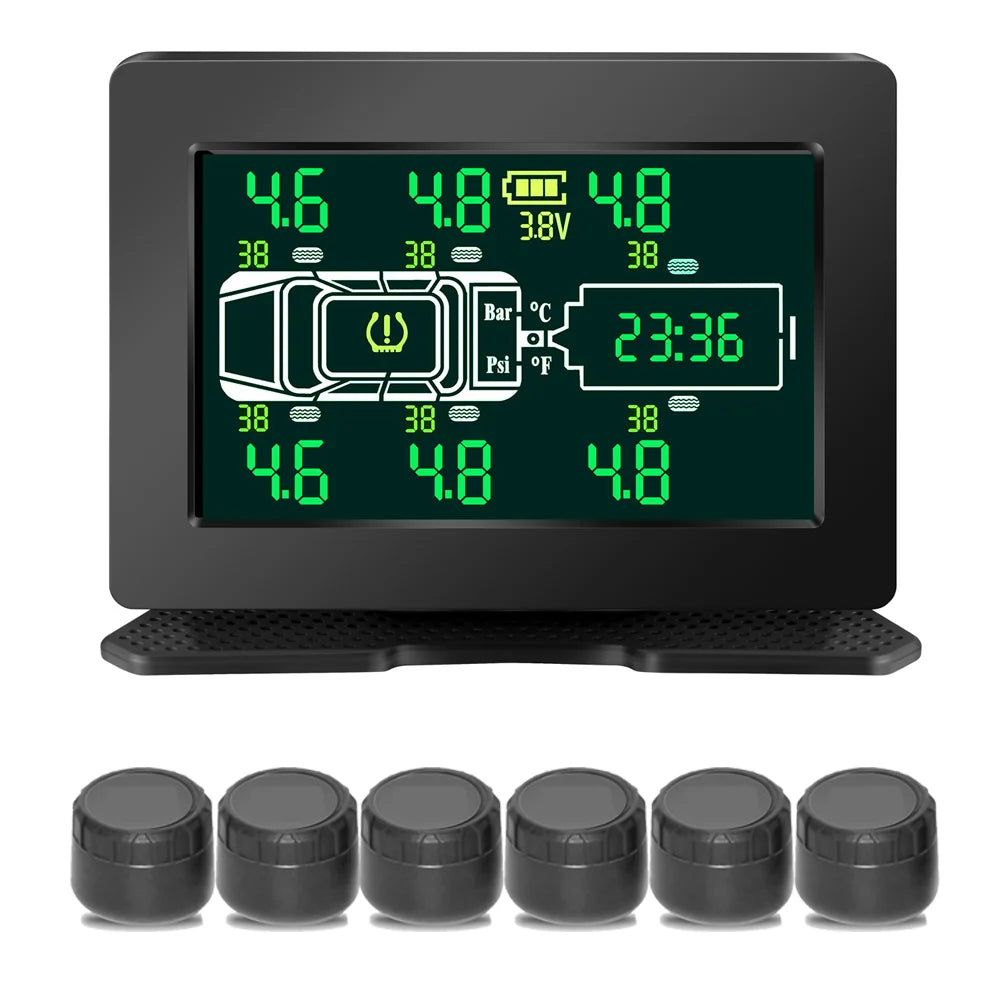
Tires represent 15 to 20 percent of total commercial vehicle operating costs — second only to fuel in most fleet budgets. Unlike fuel costs, which fluctuate with market conditions beyond an operator's control, tire costs are substantially manageable through maintenance discipline and monitoring technology. The core insight driving TPMS adoption at the fleet level is straightforward: most commercial tire failures are not random events. They are the predictable endpoints of pressure conditions that were detectable weeks or miles before the failure occurred. A solar-powered 6-wheel monitoring system on each commercial dually generates continuous pressure and temperature data that transforms tire management from reactive breakdown response into proactive cost control.
The difference between a single-vehicle owner adopting TPMS and a commercial fleet doing so is a difference of scale that changes the economic logic significantly. For an individual driver, the value of monitoring is primarily safety — the avoided blowout, the caught slow leak, the high-pressure warning on a summer mountain descent. For a fleet operator managing ten, twenty, or fifty vehicles, the same monitoring technology produces a data picture that enables systematic cost reduction: identifying which vehicles are running consistently underinflated, which drivers are generating accelerated tire wear through operating behavior, and which tire positions across the fleet are failing faster than expected.
The Cost Structure
Why Tire Costs Are the Most Controllable Variable in a Commercial Fleet Budget
The financial case for fleet TPMS begins with understanding where tire costs actually come from. The purchase price of a commercial tire — significant as it is — is only one component of total tire cost per mile. Premature wear from chronic underinflation, unplanned downtime from blowouts, secondary vehicle damage from tire failures at speed, and roadside service call costs all compound the hardware cost into a total that can be two to three times the sticker price per tire over its abbreviated service life.
The leverage point is underinflation management. A commercial tire running 10% below its minimum inflation for its load condition wears 15 to 20 percent faster — meaning a tire rated for 100,000 miles may deliver only 80,000 to 85,000 miles of useful life. Multiplied across a fleet of twenty vehicles with six tires each, the aggregate cost of chronic underinflation is a significant budget line that is entirely preventable with monitoring.
| Cost Category | Without TPMS | With Fleet TPMS |
|---|---|---|
| Blowout events per vehicle/year | 1–2 average for undermonitored fleets | Near-zero with consistent pressure management |
| Tire life per position | Shortened 15–25% by chronic underinflation | Full rated service life achieved |
| Roadside service calls | Reactive — cost per call $300–$600+ | Proactive — pre-departure pressure correction |
| Driver behavior visibility | None — tire wear patterns only visible at replacement | Real-time — pressure trends reveal operating patterns |
| Inner dual tire monitoring | Zero coverage — physically inaccessible without tools | Full coverage — independent sensor per position |
The Data Advantage
What Fleet-Level TPMS Data Actually Tells Operators
The operational value of TPMS data at the fleet level goes beyond the individual alarm. A single vehicle's TPMS alarm is an event — a tire that needs attention now. A fleet's aggregate TPMS data over weeks and months is a pattern — revealing systematic issues that no single alarm could identify.
Chronic underinflators: Specific vehicles or routes where pressure consistently runs low — indicating either driver behavior (delayed pre-trip checks), valve stem issues, or slow leaks that haven't triggered alarms but are degrading tire life continuously.
High-wear position patterns: If rear inner duals on a specific vehicle configuration consistently show faster pressure loss than other positions, it may indicate asymmetric loading or a suspension alignment issue generating uneven tire stress.
Temperature anomalies: A tire position that consistently runs hotter than others on the same vehicle suggests either a brake issue transferring heat into the wheel assembly, a bearing problem, or a recurring underinflation pattern generating excess carcass heat.
Pre-departure compliance: Consistent morning readings across a fleet reveal which vehicles are being properly checked before departure and which are departing with uncorrected pressure deficits.
This data picture is only available from direct monitoring systems — the kind that place a physical sensor on every tire position and report actual PSI and temperature values rather than inferring conditions from wheel speed. For heavy commercial vehicles where the Grundig S08 heavy-duty TPMS is required for its 218 PSI ceiling and 8/12-wheel coverage, the monitoring data provides the same fleet-level visibility across Class A diesel configurations and commercial chassis vehicles.
Implementation Best Practices
How Commercial Operators Get the Most From Fleet Monitoring
Standardize Pre-Departure Verification Across the Fleet
Before any vehicle moves, the driver should confirm that all TPMS positions are transmitting and that readings match the pre-departure pressure specification for that day's load configuration. A position that isn't transmitting or shows a reading inconsistent with the gauge check is a pre-departure issue — not a highway problem. This check takes less than two minutes and eliminates the most common cause of in-service tire failures.
Set Thresholds for Loaded Operating Conditions — Not Empty Ones
Commercial vehicles often have significantly different inflation requirements between empty and fully loaded configurations. Alarm thresholds set for empty-vehicle pressures will generate false alarms on loaded vehicles or, worse, fail to alarm when a loaded vehicle's tires drop below their minimum safe inflation. Thresholds should reflect the actual loaded operating specification for each vehicle's typical mission.
Monitor Temperature Alongside Pressure — Not Instead of It
A tire can maintain technically acceptable pressure while generating abnormal heat from an internal defect, asymmetric loading, or sustained underinflation relative to the actual load being carried. Temperature readings that are consistently elevated on specific positions — even when pressure appears normal — are an early indicator worth investigating before the condition becomes a failure event.
Use Solar-Powered Monitors to Eliminate Battery Management
For daily commercial operations, monitor battery management is a maintenance liability that introduces a specific failure mode: the monitor unit depletes while the vehicle is parked, and the driver begins the next day without monitoring coverage from the moment of startup — precisely when the pre-departure check matters most. Solar-powered monitor units eliminate this failure mode entirely, maintaining continuous power throughout all daylight operation and USB backup for overnight charging.
Plan Sensor Replacement as a Scheduled Fleet Maintenance Item
TPMS sensor batteries have a service life of 5–7 years under normal commercial use — shorter for high-mileage daily operation. Treating sensor replacement as a scheduled maintenance item rather than a reactive repair avoids the specific failure mode where a sensor silently drops out and the operator loses monitoring coverage for that position without any alarm notification.
The Fleet Systems
Commercial TPMS Solutions for Different Fleet Configurations
Grundig Solar TPMS
6-Wheel System
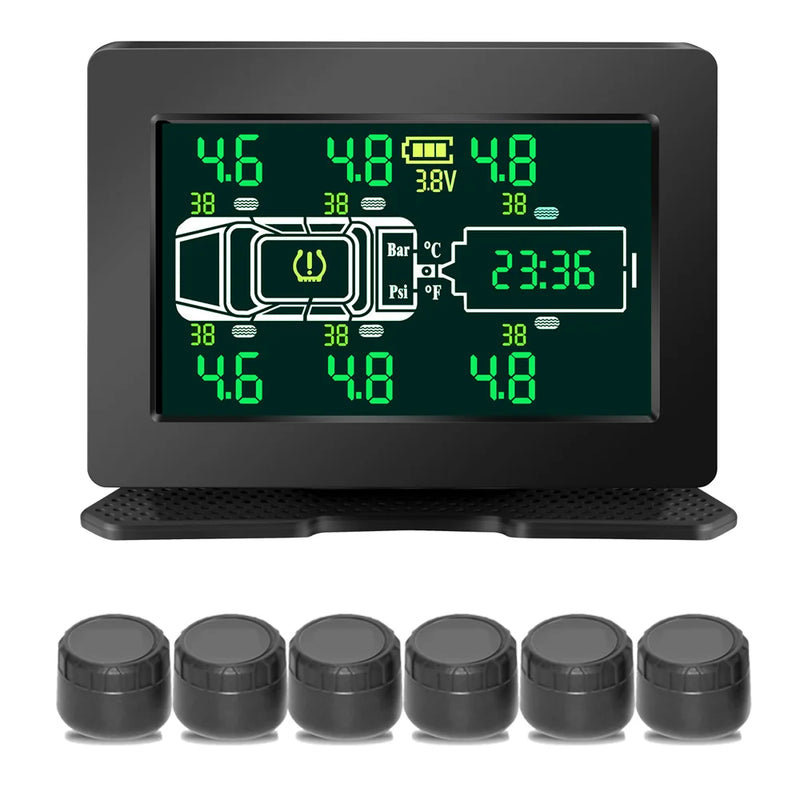
Solar + USB monitor charging — no battery management for daily fleets. 6 direct sensors including inner dual rears. 6 alarm modes. Individual position reporting for the fleet-level data picture. F-450, Ram 3500, Sierra 3500HD compatible.
See product page
Shop Now →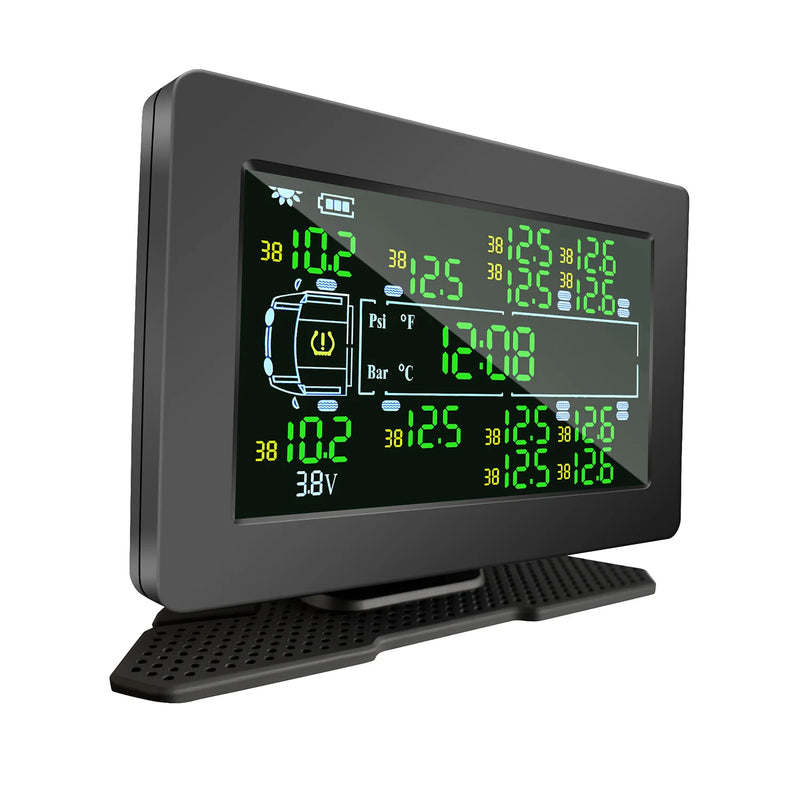
Grundig S08
Heavy-Duty TPMS
218 PSI ceiling. 8/12-wheel switchable. Class A diesel pushers, commercial chassis vehicles, tandem configurations. Purpose-built sensors rated for sustained high-pressure commercial operation. $259.
$259
Shop Now →For fleet operators comparing configurations, browse the complete Grundig TPMS range to match each vehicle type in the fleet to the right pressure ceiling and wheel count coverage.
Real-time data across every vehicle in your fleet. Solar TPMS for dually fleets · S08 for heavy commercial · Free shipping
Shop Fleet TPMS →