


Towing a Boat Trailer: Why Your TPMS Strategy Needs to Include Every Axle on the Water
Most boat trailer owners check the hitch and forget the tires. The axles nobody is watching are the ones most likely to strand you before you reach the ramp.
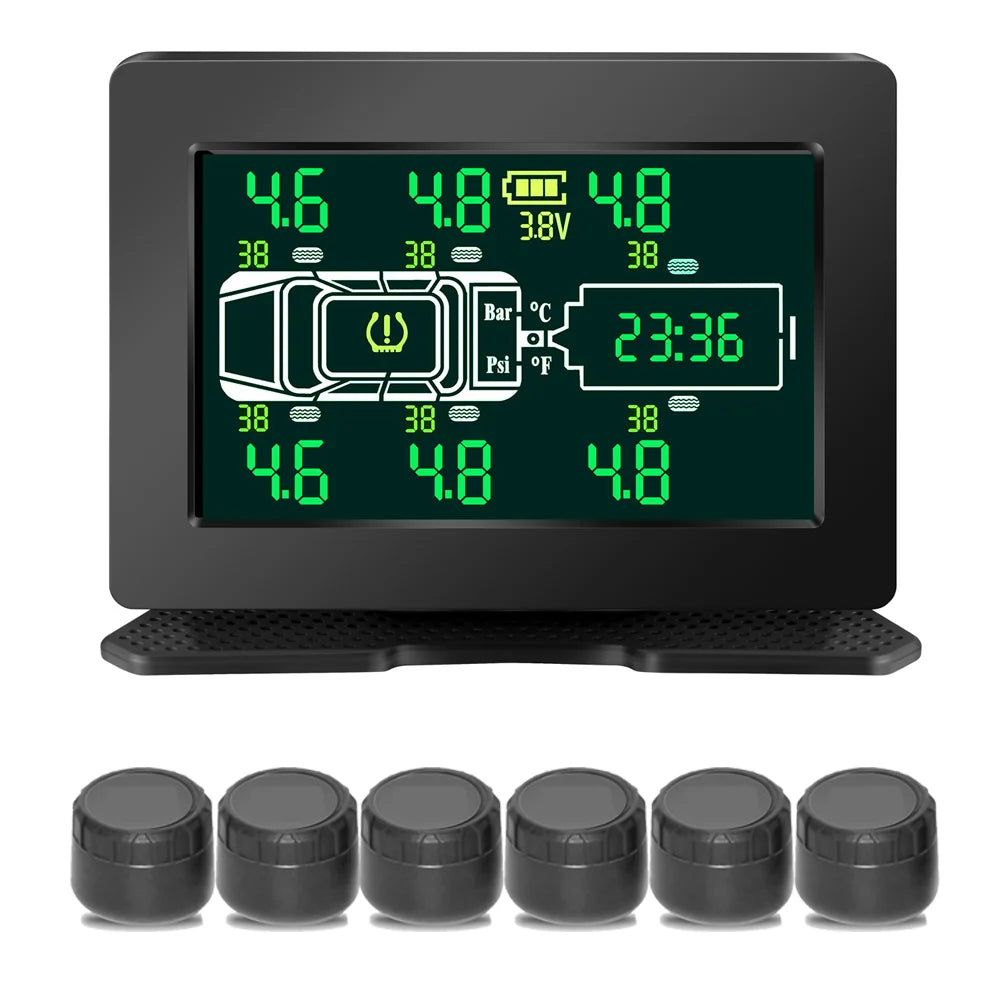
Boat trailers sit in a category of their own when it comes to tire management. They spend most of their life stationary — months in a driveway, weeks on a storage pad, days at a marina — and then get loaded to full capacity and asked to perform at highway speed with almost no warning. The tires that go the longest without being checked are the ones carrying the most weight at the moment of departure. A switchable multi-wheel tire monitoring system that covers both the tow vehicle and the trailer simultaneously is the only way to know what's happening to all six or eight contact points in real time — including the ones you can't see from the driver's seat and haven't physically checked since the previous trip.
Boat trailer tires fail at a disproportionate rate compared to tow vehicle tires, for reasons that are specific to how boat trailers are used, stored, and loaded. Understanding those reasons clarifies exactly why monitoring every axle matters — and why trailer tire failures specifically tend to announce themselves at the worst possible moment: at speed on the highway, often miles from the launch ramp, with a boat aboard.
This guide covers the three specific failure scenarios that make boat trailer tires the highest-risk tires in most towing setups, the monitoring configuration that covers them, and what the TPMS data looks like during a typical launch-day drive.
Why Boat Trailer Tires Fail More Often
Three Conditions That Make Trailer Tires the Highest-Risk Axles in Your Setup
Long Static Periods Between Uses
Boat trailers often go weeks or months without moving. During static storage, tires lose pressure at approximately 1–3 PSI per month through natural rubber permeation. A tire correctly inflated in May may be 5–8 PSI low by August — without any visible change in appearance and without any indication until the pressure is physically measured or monitored.
Hot Parking Lots and Marina Surfaces
Boat trailers wait at launch ramps and marina parking lots for hours in direct sun, on dark asphalt surfaces that can reach 150°F. The tire sitting on that surface absorbs heat through the contact patch while also facing solar radiation on the sidewall. Temperatures inside the tire can exceed safe limits before the driver returns — particularly if the tire was already marginally inflated.
Ramp Submersion and Moisture Exposure
Launching and retrieving involves submerging the trailer axles — and in many cases the lower portion of the tires — in water, then immediately returning to highway speed. The thermal shock of submersion followed by friction heat at speed creates stress conditions unique to boat trailer tires. Moisture in the valve core area can freeze at night in cold conditions and cause pressure loss.
Sudden Full-Load Departure
Unlike an RV that's loaded gradually, a boat trailer goes from empty to full capacity at the moment of retrieval. Tires that were sitting lightly loaded during the launch wait are suddenly asked to carry the full weight of the boat, motor, and fuel — without any period of gradual load increase that would allow the driver to notice handling changes before reaching highway speed.
The Monitoring Blind Spot
What a 4-Wheel TPMS Misses When You're Towing
A tow vehicle TPMS — whether factory OEM or a 4-wheel aftermarket system — monitors the truck. It provides zero information about the trailer tires. For a driver who can feel changes in the tow vehicle through the steering wheel, brake response, and vehicle behavior, the tow vehicle tires are already relatively well-monitored. The trailer tires are completely invisible: no tactile feedback, no visual access from the driver's seat, no monitoring without a dedicated system that covers them explicitly.
A boat trailer tire losing pressure at highway speed typically makes itself known through trailer sway — which by the time it's noticeable has already placed significant stress on the hitch and tow vehicle components, and represents a situation that requires immediate speed reduction and controlled stopping. The alternative — knowing about the developing pressure drop from the TPMS 20 miles before the sway begins — is available only when trailer tire positions are included in the monitoring configuration.
Configuration Guide
Matching Wheel Mode to Your Towing Setup
4-Wheel Mode
Tow vehicle only. Standard truck without duals. Use when trailer tires are on a separate dedicated system.
6-Wheel Mode
Standard truck (4) + single-axle boat trailer (2). Covers the most common boat towing configuration on a single display.
8-Wheel Mode
Dually truck (6) + single-axle trailer (2), or standard truck + tandem-axle boat trailer (4). Covers larger setups.
The 4/6/8-wheel switchable design allows the system to reconfigure when the towing setup changes — adding a second trailer axle, switching to a dually tow vehicle, or removing the trailer for non-towing use. One system covers every configuration rather than requiring a new purchase each time the setup changes. For dually truck operators who need 6-wheel coverage for the truck alone before adding trailer positions, the Grundig Solar 6-Wheel TPMS provides solar-powered continuous monitoring for all dually positions with no monitor battery management required.
Launch Day Protocol
What the TPMS Should Show at Each Stage of a Boat Trip
-
1Before Departure — Verify All PositionsCheck that all six or eight positions are transmitting and that readings match the correct cold inflation for the loaded weight. Trailer tires that have been sitting since the last trip are the most likely to show a pressure deficit at this stage.
-
230 Minutes Into the Drive — Confirm WarmupAll tire positions should show rising pressure as friction heat builds. A trailer tire that isn't warming at the same rate as the others may have an internal issue or insufficient inflation for the load being carried.
-
3At the Ramp — Note Pre-Launch ReadingsRecord the trailer tire readings before launching. After ramp submersion and a wait in the parking lot, compare to these readings — significant divergence indicates the submersion or heat exposure has affected the tire condition.
-
4After Retrieval — Check Before Returning to Highway SpeedA tire that was submerged during retrieval and then exposed to a hot parking lot while waiting may be in a different pressure state than it was at launch. Verify readings before accelerating to highway speed for the return trip.
-
5Monitor Continuously on the Return TripThe return trip typically has the highest trailer load — boat, motor, full fuel, wet gear. Fully loaded tires at highway speed after the thermal stress of the launch cycle are in the highest-risk condition of the day. This is when continuous monitoring provides the most value.
Grundig RV TPMS
4/6/8-Wheel Switchable
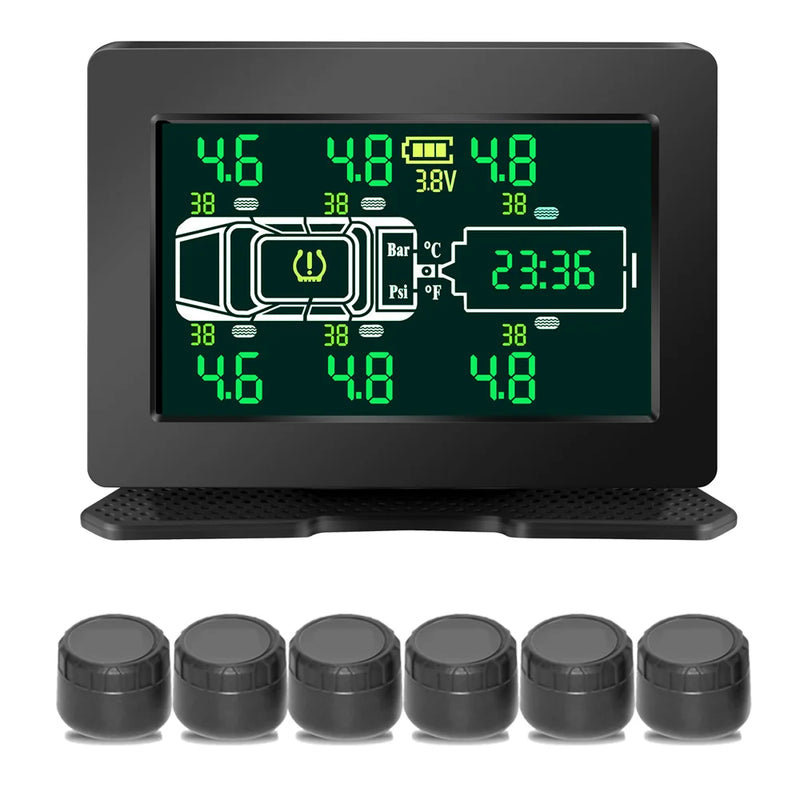
116 PSI range. Monitors tow vehicle and trailer simultaneously in 6 or 8-wheel mode. 5.0" display shows all positions at a glance. Catches trailer tire pressure loss before it becomes trailer sway. $119. Free shipping.
$119
Shop Now →Browse the complete Grundig TPMS lineup to compare all systems and confirm the right configuration for your specific tow vehicle and trailer combination.
Monitor the tow vehicle and the trailer. Every axle, every mile. 6-wheel mode covers truck + trailer · Free shipping · $119
Shop RV TPMS →