

TPMS Troubleshooting Guide: Sensor Dropout, False Alarms, and Signal Loss Explained
A TPMS that gives wrong information is worse than no monitoring at all. Here's how to diagnose and fix the three most common problems — before they matter on the road.
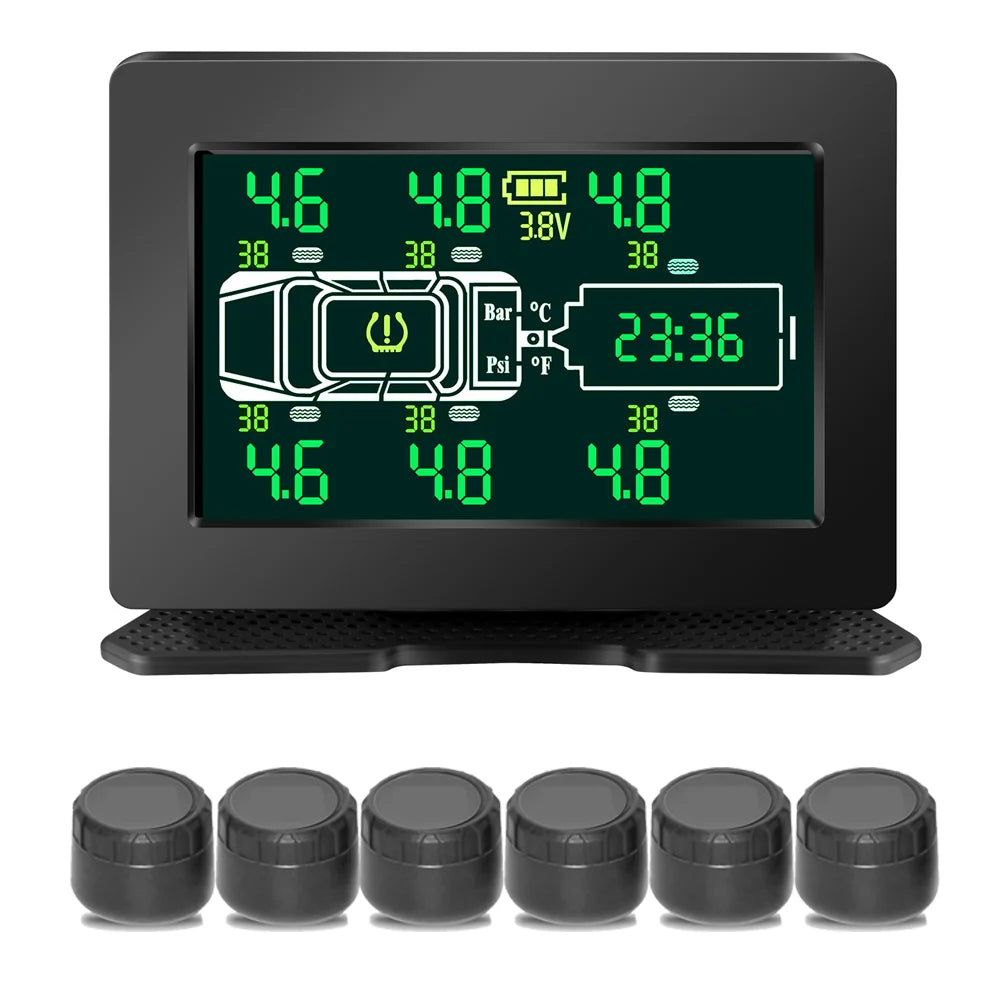
A TPMS that generates constant false alarms gets ignored. A sensor that drops off the display goes unnoticed until it's needed. A reading that disagrees with a gauge check creates doubt about whether the system is working at all. These are the three failure modes that undermine confidence in an otherwise useful monitoring tool — and all three have specific causes and specific fixes. The Grundig TPMS range is designed for reliable long-term operation, but no monitoring system is immune to the environmental conditions, installation variables, and component age factors that produce these issues. This guide covers each problem category systematically: what causes it, how to confirm the diagnosis, and what resolves it.
The troubleshooting approach follows a diagnostic sequence: confirm what the monitor is showing, determine whether the issue is with the sensor, the monitor, the signal path, or the alarm configuration, then apply the fix in order from most to least likely cause. Most issues resolve at the first or second step of the diagnostic sequence.
Issue 1
Position Dropout — One or More Positions Stop Showing on the Display
Symptom: A monitored position disappears from the display or shows dashes
- Sensor lost pairing with the monitor after a battery swap or monitor reset
- Sensor physically damaged — valve stem impact, pressure washer, tyre mounting
- Sensor not transferred during tyre rotation or replacement service
- Monitor out of range from sensor (can occur on larger trailers)
Issue 2
False Alarms — Low or High Pressure Alarm Fires When Tires Are Correctly Inflated
Symptom: Alarm fires repeatedly but gauge check shows correct pressure
- High pressure alarm set too low — triggers from normal friction heat buildup during highway driving, not actual overinflation
- Temperature alarm set lower than normal operating temperature for the vehicle type
- Sensor reading calibration drift — sensor consistently reading 3–5 PSI different from gauge
Issue 3
Intermittent Signal — Position Appears and Disappears Randomly
Symptom: A position appears on the display intermittently — present sometimes, missing others
- Moisture infiltration into sensor housing — causes intermittent contact corrosion at battery terminals
- Monitor position relative to sensor — metal trailer body or chassis blocking signal in certain orientations
- Radio frequency interference from nearby equipment at specific locations
- Loose valve stem — sensor moving with wheel rotation rather than transmitting stably
Issue 4
Readings Disagree With Gauge — Consistent Discrepancy Between Monitor and Physical Measurement
Symptom: TPMS readings are consistently higher or lower than gauge check by more than 2–3 PSI
- Temperature difference between gauge check and TPMS reading — if tyre was warm when gauged and the TPMS displays current warm-tyre pressure, readings will differ legitimately
- Sensor calibration drift after several years of operation
- Air loss during gauge check — stick gauges can release a small amount of air during measurement
First: check sensor age and battery status.
Second: verify alarm thresholds are configured correctly for the vehicle's pressure range.
Third: cross-check readings against a verified gauge to determine whether the sensor or the thresholds are the issue.
Fourth: inspect physical sensor condition and mounting.
Only after these four steps have been completed should component replacement be considered — most problems resolve at step one or two.
For support with specific Grundig system configurations, browse the full Grundig RV TPMS, Solar 6-Wheel, and S08 heavy-duty product pages for system-specific pairing and configuration documentation.
Grundig RV TPMS
116 PSI, 4/6/8-wheel. Configurable thresholds eliminate most false alarm scenarios. Low-battery alert before dropout. $119.
$119
Shop Now →Solar TPMS 6-Wheel
Solar charging eliminates the monitor battery dropout failure mode. 6 direct sensors with low-battery warning before signal loss.
$109
Shop Now →Grundig S08 TPMS
218 PSI ceiling eliminates the threshold misconfiguration false alarm that affects commercial vehicles on standard TPMS systems. $259.
$259
Shop Now →Reliable monitoring — properly configured and maintained. Free shipping on all systems · From $119
Shop All TPMS →