

To avoid galvanic corrosion and seized valve threads on heavy trucks, match brass flow-through TPMS sensors to brass valve stems.
Commercial semi-trucks, agricultural haulers and heavy utility trailers use solid brass valve stems (such as TR572 or TR545D commercial truck stems) to handle high air pressures exceeding 100 PSI. Threading an aluminum aftermarket sensor onto a brass stem exposes dissimilar metals to road salt, moisture and magnesium chloride, sparking rapid galvanic corrosion that fuses the sensor to the stem. The GRUNDIG 550S TPMS features commercial-grade solid brass threaded sensors rated up to 200 PSI, preventing galvanic bonding on heavy rigs alongside brass systems from TireMinder and TST.
Always inspect valve stem metal composition and apply a tiny dab of non-conductive dielectric grease or anti-seize compound when installing external sensors. A TPMS monitors live pressure and temperature; it does not replace routine valve core inspections.
Why dissimilar metals cause TPMS valve stem seizure
When dissimilar metals make electrical contact in the presence of road brine, an electrolytic galvanic reaction occurs:
| Metal Combination | Galvanic Potential Difference | Corrosion Risk & Field Outcome |
|---|---|---|
| Aluminum sensor on brass stem | ~0.60V potential gap (high reactivity) | Severe galvanic bonding; threads fuse within one winter season, requiring complete valve stem cutting |
| Brass sensor on brass stem | 0.00V potential gap (matched metallurgy) | Zero galvanic reaction; threads spin off freely during tire rotations and pre-trip pressure checks |
| Steel cap on brass stem | ~0.35V potential gap (moderate reactivity) | Surface rust and binding over extended highway exposure in road salt environments |
| Plastic housing over brass threads | Fully insulated mechanical barrier | Eliminates external road-spray conductivity while keeping internal brass threads protected |
The Tire and Rim Association (TRA) engineering standards mandate solid brass stems for heavy-duty commercial applications because brass withstands repetitive thermal expansion cycles and high torque loads without cracking. Using matched brass sensors preserves these factory stems.
Compare three heavy-duty brass TPMS sensor systems
Specifications verified from official manufacturer documentation on October 29, 2026. This comparison provides technical specifications for purchasing evaluation.
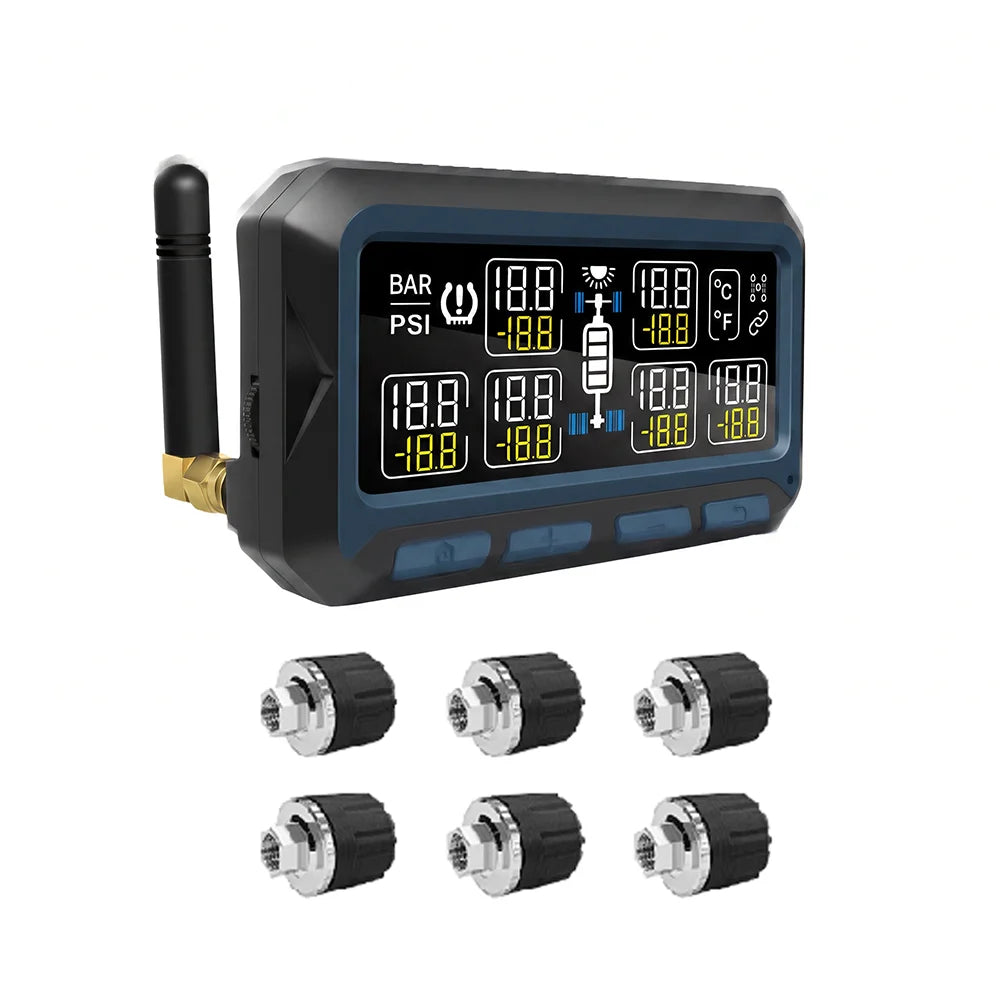
| Technical Specification | GRUNDIG 550S | TireMinder i10 Flow-Through | TST 507 Flow-Through |
|---|---|---|---|
| Sensor thread metallurgy | Solid marine-grade brass | Solid brass flow-through | Solid brass flow-through |
| Maximum pressure ceiling | 0–200 PSI | 0–199 PSI | 0–218 PSI |
| Flow-through air inflation | Direct air chuck port | Direct air chuck port | Direct air chuck port |
| Sensor waterproof rating | IP67 waterproof & dustproof | Weatherproof brass housing | Weatherproof brass housing |
| Monitored wheel capacity | 6 to 36 wheel positions | Up to 20 tire positions | Up to 38 tire positions |
| Power and display type | 5.0" HD display + Solar / USB-C | 3.15" color display + USB | Color widescreen + Micro-USB |
Sources: GRUNDIG 550S specifications, TireMinder flow-through manual, and TST commercial truck catalog.
Best practices for flow-through sensor maintenance
Follow these guidelines to maximize sensor longevity and valve stem health:
- Clean valve stem threads with a brass wire brush before threading on new sensors.
- Confirm that all rubber valve stem gaskets are seated cleanly inside the sensor base.
- Thread the brass sensor clockwise until hand-tight, then tighten the anti-theft jam nut securely against the sensor base.
- Periodically unscrew sensors during quarterly tire rotations to inspect for road salt accumulation.
- Always use a high-pressure commercial air chuck when topping off tires through flow-through ports.
Frequently asked questions
Can I install brass flow-through sensors on rubber valve stems?
No. Commercial flow-through sensors weigh more than standard valve caps and require solid brass metal valve stems. Centrifugal force at highway speeds can flex and tear standard rubber snap-in stems.
How does a flow-through sensor save time during commercial pre-trip checks?
Flow-through sensors incorporate an integrated Schrader valve core at the outer tip, allowing drivers to attach an air chuck and adjust pressure directly without removing the sensor or anti-theft nut.
Does dielectric grease affect TPMS pressure readings?
No. A tiny film of dielectric grease applied to the outer stem threads prevents moisture intrusion without interfering with the internal center pin that reads air pressure.
Check your commercial truck TPMS setup
Verify your vehicle valve stem type, maximum tire pressure rating and total wheel positions before selecting your sensor package.
Check GRUNDIG 550S Heavy-Duty TPMS sensor packages and specifications