


Die TPMS-Strategie für Überlandreisen: Reifendruck über Klimazonen hinweg verwalten
Eine Reise von Texas nach Montana umfasst eine Umgebungstemperaturspanne von 50 °F. Der Reifendruck, der bei der Abfahrt in der Hitze der Golfküste korrekt war, ist nicht derselbe Wert, der in der Höhe der Rocky Mountains geeignet ist.
Eine eintägige Fahrt innerhalb einer Klimazone bietet eine vorhersehbare Umgebung für den Reifendruck. Eine mehrtägige Überlandreise hingegen nicht. Die Druckverhältnisse auf einer Fahrt von Houston zum Glacier-Nationalpark umfassen Sommerhitze in den Ebenen von Texas, zunehmende Höhe an den Pässen von Colorado, trockene Bergwüste in Wyoming und möglicherweise Temperaturen unter dem Gefrierpunkt über Nacht in Montana — und das alles innerhalb von fünf Tagen. Jeder Zonenwechsel führt zu einem anderen Ausgangswert des Reifendrucks, einer anderen Interpretation der Alarmschwellen und einem anderen Risikoprofil für gleichzeitig zu niedrigen und zu hohen Reifendruck. Ein Reifendrucküberwachungssystem in Echtzeit, das unter allen Fahrbedingungen kontinuierlich Druck- und Temperaturdaten liefert, ist das einzige Hilfsmittel, das diese Veränderungen während einer Reise durch mehrere Zonen präzise verfolgt, statt sie nur am Abfahrtsort unter den dort herrschenden Bedingungen zu erfassen.
Dieser Leitfaden zeigt die konkreten Entscheidungen zum Reifendruckmanagement, die in jeder Phase einer beispielhaften Überlandreise anstehen, einschließlich der TPMS-Strategie für jeden Zonenwechsel. Route, Fahrzeug und Bedingungen sind repräsentative Beispiele — die Grundsätze gelten für jede mehrtägige Reise mit erheblichen Temperatur- oder Höhenunterschieden.
Der Einfluss der Klimazone
Wie stark sich der Reifendruck auf einer fünftägigen Überlandroute verändern kann
| Zone / Ort | Typischer Temperaturbereich | Höhe | Druckauswirkung im Vergleich zum Ausgangswert auf Meereshöhe bei 65 °F |
|---|---|---|---|
| Golfküste, Texas (Abfahrt) | 88–95 °F | Meereshöhe | +2–3 PSI durch die Wärme (mit korrektem kaltem Reifendruck starten) |
| Ebenen von Oklahoma/Kansas | 82–90 °F + Hitze am Mittag | 1.000–3.000 Fuß | +1 PSI durch die Höhe, +2 PSI durch die Wärme = insgesamt +3 PSI über dem Ausgangswert |
| Colorado Front Range (5.000 Fuß) | 65–78 °F | 5.000 Fuß | +1,3 PSI durch die Höhe, –1 PSI durch die niedrigere Temperatur = netto ca. +0,3 PSI |
| Pass in den Rocky Mountains (über 10.000 Fuß) | 45–60 °F | Über 10.000 Fuß | +2,2 PSI durch die Höhe, –2 PSI durch die niedrigere Temperatur = netto ca. +0,2 PSI — durch die Bremsenwärme bei der Abfahrt kommen jedoch zusätzlich +3–4 PSI hinzu |
| Wyomings Hochwüste | 55–75 °F / sinkt über Nacht auf 40 °F | 6.500 Fuß im Durchschnitt | Deutlicher nächtlicher Temperaturabfall – bis zur Abfahrt am Morgen 3–5 PSI Druckverlust |
| Montana (Ankunft) | Tagsüber 50–65 °F / nachts 35–45 °F | Durchschnittlich 3.500 Fuß | Deutlich kühler als die Abfahrtsregion – morgendliche Drücke 5–8 PSI unter dem kalten Reifendruck für Texas |
Strategie für jeden Tag
Was in jeder Phase überwacht und angepasst werden sollte
Ebenen von Texas
Abfahrt bei sommerlicher Hitze – Kalten Reifendruck einstellen, bevor der Tag wärmer wird
Fahren Sie früh am Morgen los, bevor die Umgebungstemperatur ihren Höchststand erreicht. Stellen Sie den kalten Reifendruck korrekt zwischen 6 und 7 Uhr ein, nicht am Vormittag. Sobald das Fahrzeug Autobahngeschwindigkeit erreicht, steigen Reibungswärme und Umgebungstemperatur bereits an. Achten Sie am Nachmittag darauf, ob sich der Druck dem oberen Schwellenwert nähert – die richtige Reaktion ist eine verringerte Geschwindigkeit, nicht das Ablassen von Luft. Bestätigen Sie am Ende des Abfahrtstags, dass alle Werte vor dem Abstellen im zulässigen Bereich liegen.
Anstieg in Colorado
Höhengewinn – Scheinbaren Druckanstieg ohne Luftzufuhr erwarten
Mit zunehmender Höhe entlang der Front Range und in den Rocky Mountains steigen die Messwerte um etwa 0,5 PSI pro 1.000 Fuß – nicht weil Luft hinzugefügt wurde, sondern weil der atmosphärische Druck gesunken ist. Das TPMS zeigt diesen scheinbaren Anstieg an. Lassen Sie in großer Höhe keine Luft ab, um diese Werte zu „korrigieren“. Prüfen Sie den kalten Reifendruck am folgenden Morgen auf der Übernachtungshöhe, um für diese Höhe den korrekten Ausgangswert festzulegen.
Gebirgspass
Bergabfahrt – Temperaturwerte vorher und nachher prüfen
Prüfen Sie vor Beginn einer längeren Bergabfahrt die TPMS-Werte. Wenn der Druck aufgrund der Kombination aus Höheneffekt und Reibungswärme beim Anstieg nahe am oberen Schwellenwert liegt, halten Sie an und lassen Sie die Reifen vor der Abfahrt abkühlen. Während der Abfahrt erhöht die Bremswärme den Druck auf einer bereits erhöhten Ausgangsbasis zusätzlich. Überwachen Sie die Temperaturwerte aktiv – eine erhöhte Temperatur an bestimmten Positionen während der Abfahrt weist auf eine Übertragung der Bremswärme auf die Reifenbaugruppe hin.
Übernachtung in Wyoming
Kalter Übernachtungsstopp – Schwellenwerte für den Morgen anpassen
In der Hochwüste Wyomings sinken die Nachttemperaturen häufig um 30–40 °F unter das Tagesmaximum. Ein über Nacht abgestelltes Fahrzeug hat morgens 3–5 PSI weniger Reifendruck als am Vorabend. Überprüfen Sie das TPMS vor der Abfahrt und korrigieren Sie jeden Druckabfall – besonders wichtig, wenn die Nachttemperatur deutlich niedriger war als die Bedingungen, für die die Schwellenwerte ursprünglich konfiguriert wurden.
Ankunft in Montana
Kühlste Bedingungen der Fahrt – Ausgangswerte neu festlegen
Bei der Ankunft in der kühlsten und möglicherweise höchstgelegenen Zone der Fahrt wird der Reifendruck am kalten Morgen deutlich niedriger sein als der Ausgangswert in Texas – sowohl aufgrund der niedrigeren Temperatur als auch der Höhenkorrektur. Stellen Sie den korrekten Reifendruck für die tatsächlichen Bedingungen an diesem Ort ein. Die TPMS-Schwellenwerte müssen möglicherweise aktualisiert werden, um den neuen Ausgangswert widerzuspiegeln, wenn die Bedingungen in Montana in den nächsten Tagen die Betriebsumgebung sein werden.
Die Systeme
Überlandüberwachung für jede Konfiguration
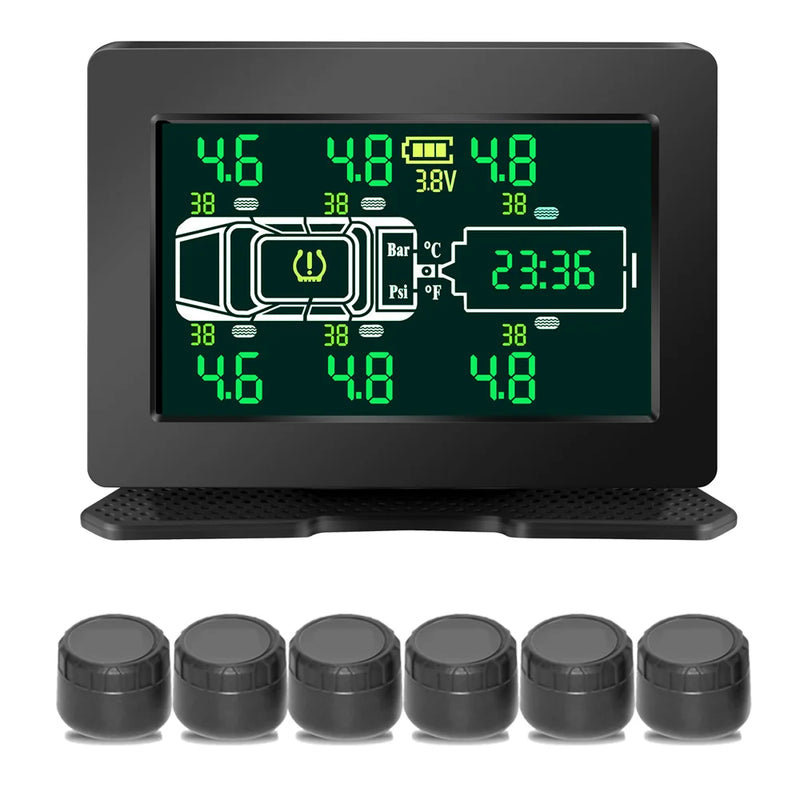
Grundig RV TPMS
4/6/8 Räder
Druckbereich bis 116 PSI. Echtzeitaufzeichnung von Druck und Temperatur über die gesamte Klimazonen-Variation einer Überlandfahrt. Für 4/6/8 Räder – deckt Konfigurationen mit Wohnmobil und gezogenem Fahrzeug ab. 119 $.
$119
Jetzt kaufen →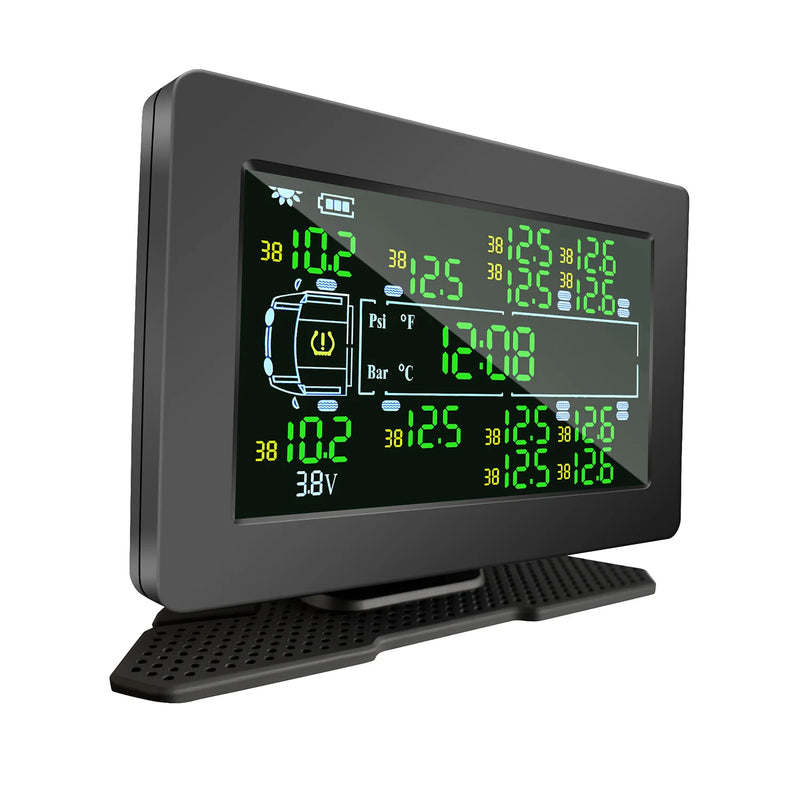
Grundig S08 TPMS
8/12 Räder
218 PSI Maximaldruck für Diesel der Klasse A, bei dem die texanische Sommerhitze in Verbindung mit Höhenlage und Bremswärme den Betriebsdruck in Richtung des erforderlichen Spielraums des S08 treiben kann. 259 $.
$259
Jetzt kaufen →Durchsuchen Sie das vollständige Grundig-TPMS-Sortiment, um vor einer Überlandfahrt das richtige System für die Druckspezifikation und Radkonfiguration Ihres Fahrzeugs zu bestätigen.
Überwachen Sie jede Klimazone – nicht nur die, von der Sie losgefahren sind. RV-TPMS 119 $ · S08 259 $ · Kostenloser Versand
RV-TPMS kaufen →