


RV Tire Age and TPMS: Why Monitoring Matters More as Tires Get Older
A tire that looks fine from the outside may have structural changes inside that make real-time pressure and temperature monitoring more important than it was when the tire was new.
Tire age is a risk factor that is frequently underestimated by RV owners because old tires often look acceptable. The tread isn't worn out. There are no obvious cracks. The sidewall appears intact. What isn't visible is the internal structural degradation that rubber compounds undergo over time — a process that accelerates with UV exposure, ozone contact, temperature cycling, and long static storage periods. A continuous RV tire pressure monitor becomes more valuable, not less, as tires age — because older tires have reduced structural reserve, lose pressure faster, and generate heat abnormalities before the external appearance gives any indication of a problem developing inside.
Most RV tire manufacturers and the Tire Industry Association recommend replacing RV tires at 5 to 7 years regardless of tread depth and visual condition. Many RV owners extend beyond this window — sometimes significantly — because the tires appear serviceable. Understanding what changes in the tire as it ages, and how those changes alter the risk profile that TPMS monitoring is designed to catch, is the basis for making an informed decision about both replacement timing and monitoring intensity.
The Age Risk Curve
How RV Tire Risk Changes From Year One to Year Ten
New tire window
Full structural reserve. Rubber compounds at peak elasticity. Lowest risk profile — standard monitoring appropriate.
Mid-life monitoring
Compounds beginning to oxidise. Pressure retention slightly reduced. Annual visual inspection and continued TPMS monitoring recommended.
Replacement window
Manufacturer replacement threshold. Internal ply adhesion may be reduced. TPMS temperature monitoring more critical — heat anomalies can precede pressure failure.
Beyond recommended life
Structural reserve significantly reduced. Risk of sudden carcass failure increases. If not replaced, continuous monitoring with low threshold settings is essential.
What Changes Inside
The Three Age-Related Changes That Make TPMS More Important
Reduced Air Retention — Pressure Drops Faster
Rubber compounds in aging tires undergo oxidation and micro-cracking at the molecular level that is not visible externally but increases the rate at which air molecules permeate through the carcass. A new tire may lose 1–2 PSI per month through natural permeation. A 7-year-old tire with age-related compound degradation may lose 3–5 PSI per month, and more rapidly during temperature extremes. This accelerated pressure loss means that a pre-departure check that was accurate the previous week may not reflect current conditions by departure day — and that slow pressure decline during a drive is more pronounced than it would be on a newer tire.
Altered Heat Behaviour — Temperature Anomalies Appear Earlier
New tires distribute heat generation relatively evenly across the carcass during normal operation. Older tires with age-related ply adhesion degradation — where the layers bonded together at manufacturing have begun to separate microscopically — generate localised heat in the affected areas before any pressure change is detectable. TPMS temperature monitoring catches this heat anomaly before it produces a pressure alarm, providing earlier warning on an aging tire than pressure-only monitoring would. This is the specific scenario where temperature data provides the greatest additional value over pressure data alone.
Reduced Structural Reserve — Less Margin Before Failure
A new tire operating 10 PSI below its minimum rated pressure for its load is underinflated but has substantial structural reserve before reaching failure conditions. A 7-year-old tire with the same 10 PSI deficit has less structural reserve — the combination of age-related compound degradation and underinflation stress produces failure conditions at a lower cumulative stress level. This means the window between a detectable pressure problem and a structural failure is narrower on an older tire, making early detection through monitoring proportionally more important, not less.
Finding Your Tire's Age
How to Read the DOT Date Code
Every tire manufactured after 2000 carries a DOT code on the sidewall that includes a four-digit week-and-year manufacture date. Understanding how to read this code is the first step in assessing whether your tires are within their recommended service life.
Reading the DOT Date Code
A tire marked 2419 was manufactured in the 24th week of 2019. As of 2026, that tire is approximately 7 years old — at or beyond the replacement threshold recommended by most RV tire manufacturers. The appearance of the tire tells you nothing reliable about this — a lightly used tire stored indoors may look brand new at 7 years while having undergone the same internal compound degradation as a heavily used example.
Monitoring Adjustments for Older Tires
How to Configure TPMS for Maximum Early Warning on Aging Tires
1. Tighten the low-pressure alarm threshold. Set the low-pressure alarm 5 PSI higher than you would for new tires — for example, 90 PSI instead of 85 PSI on a tire with a 100 PSI correct inflation. This provides an earlier warning before the reduced structural reserve of an older tire reaches its failure threshold.
2. Watch temperature readings more closely than pressure. On aging tires, elevated temperature at a specific position before any pressure change is the most useful early warning signal. If one position consistently runs hotter than the others, investigate immediately regardless of whether the pressure reading has changed.
3. Check the pre-departure reading against the previous departure's reading. An aging tire losing pressure faster than a new one will show a larger overnight decline. If a tire is consistently losing 3+ PSI overnight rather than the expected 1–2 PSI, it warrants closer attention.
4. Reduce the interval between physical inspections. TPMS monitors the air inside the tire — it does not monitor the rubber condition externally. Quarterly visual inspections for cracking, sidewall bulging, and tread surface anomalies complement the monitoring data and should be more frequent on tires over 5 years old.
For Class A motorhomes where rear axle pressures exceed 100 PSI, the Grundig S08 heavy-duty TPMS covers up to 218 PSI across 8 and 12-wheel configurations — providing the same early temperature warning capability on high-pressure commercial chassis tires where the age-related risk profile is compounded by higher sustained operating loads. Browse the full Grundig TPMS range for all configurations.
Grundig RV TPMS
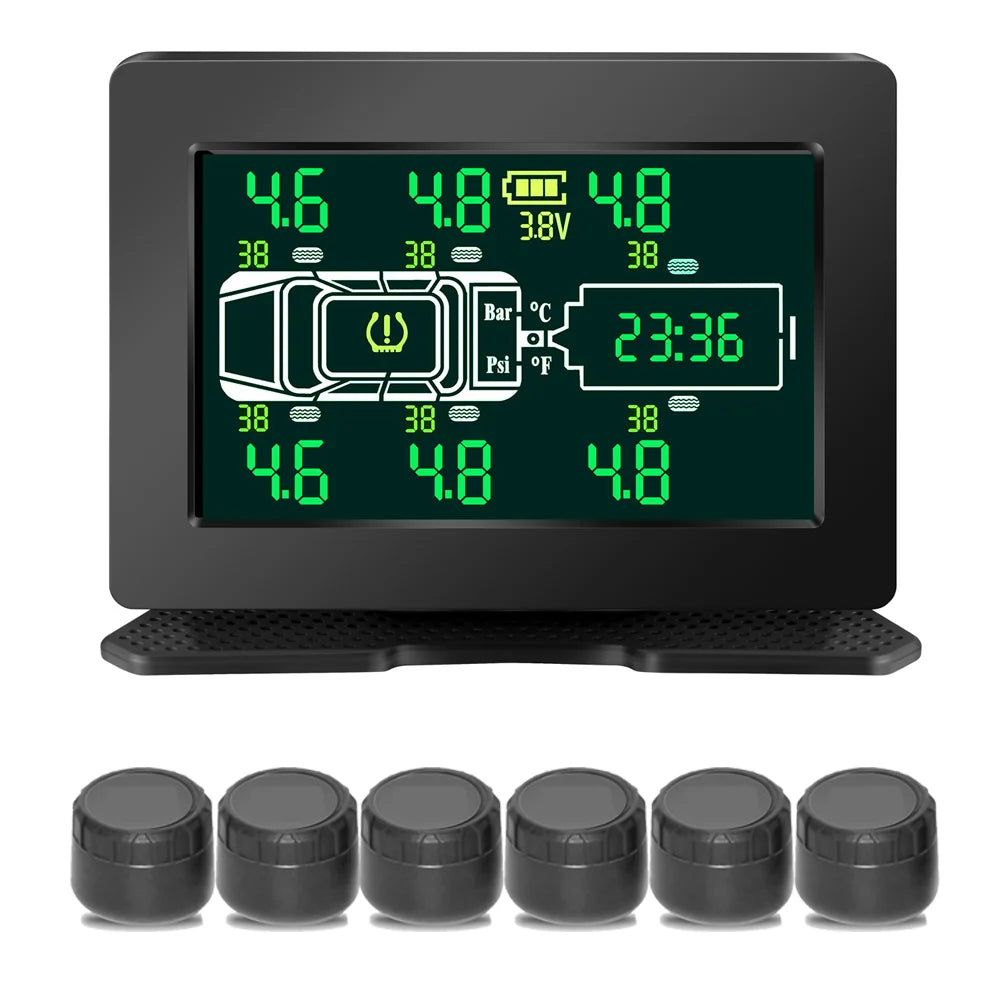
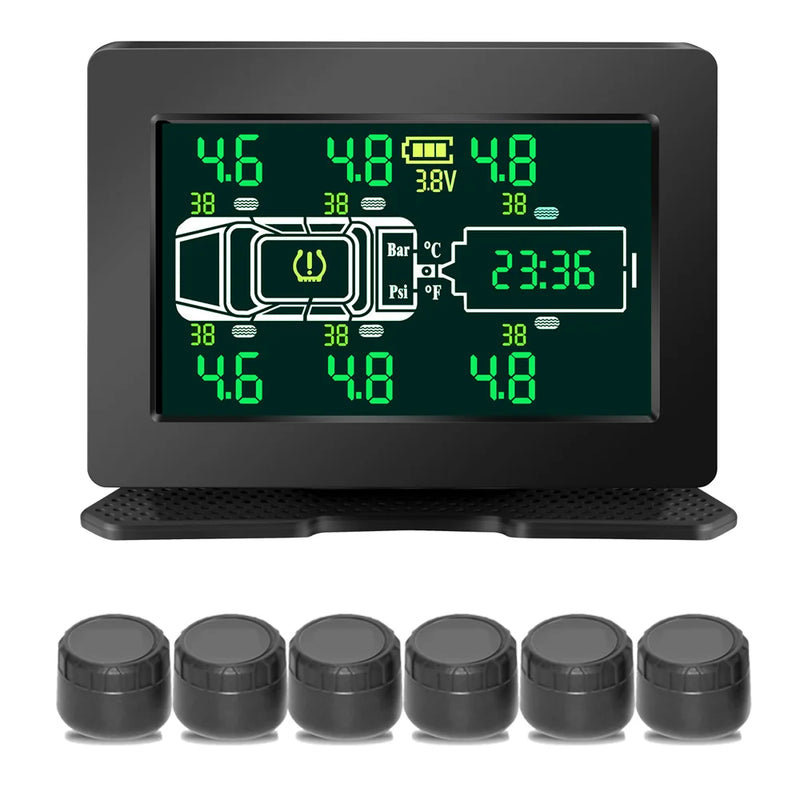
Real-time pressure AND temperature. Temperature monitoring provides early warning on aging tires before pressure deviation is detectable. 116 PSI, 4/6/8-wheel, $119.
$119
Shop Now →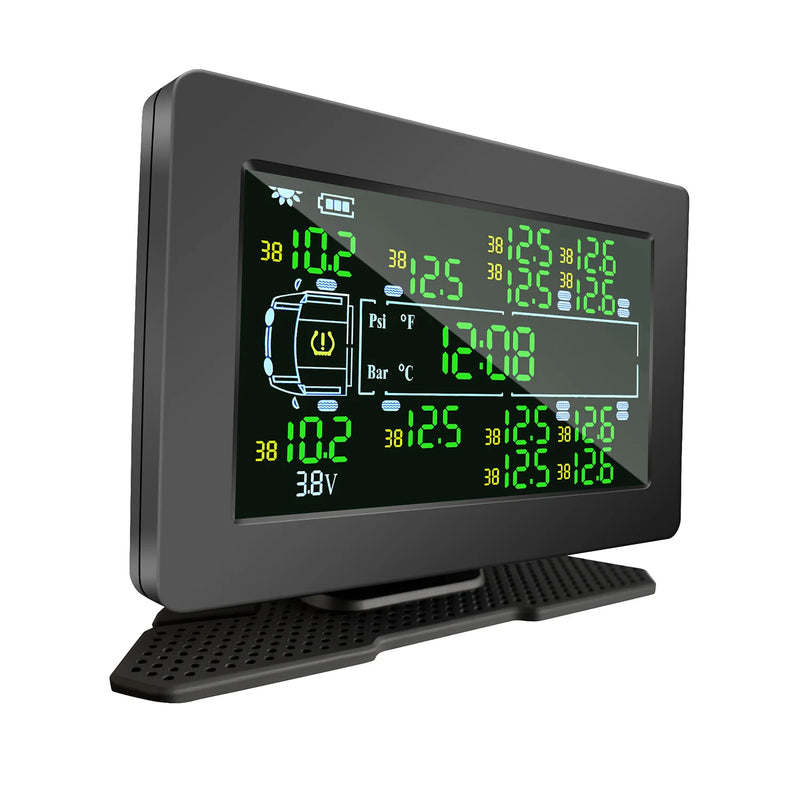
Grundig S08 TPMS
218 PSI ceiling, 8/12-wheel. Temperature and pressure monitoring for high-load aging tires where structural reserve depletion is most consequential. $259.
$259
Shop Now →Monitor pressure and temperature — the early warning aging tires need. RV TPMS $119 · S08 $259 · Free shipping
Shop RV TPMS →